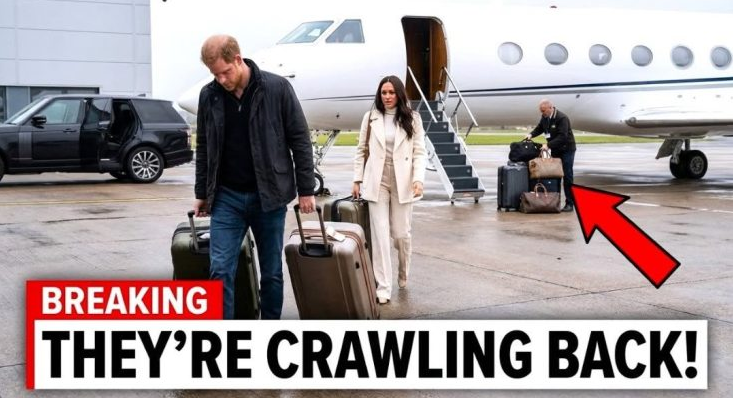
Prince Harry and Meghan Markle are reportedly preparing to return to the
United Kingdom after six years of building a life in California, a move that commentators have framed as a dramatic U-turn driven by financial desperation and failed Hollywood ambitions. The couple, who left the UK in March 2020 on a private jet they called their “freedom flight,” have allegedly confirmed plans to move their family back to Britain, with their children, Archie and Lilibet, already enrolled in a UK school.
The announcement landed, according to the report, on a Sunday like a “locked finish deal,” with King Charles III reportedly informed via a phone call and given no prior warning during a July visit to Highgrove. This timing, critics have argued, represents a stark betrayal, as the king was allegedly blindsided by a decision made without any of the careful family discussions that might have eased the transition.
The move has been characterized by the commentary as a “jaw-dropping reversal,” given that just 15 months ago, Harry stated in an interview that he could not see a world in which he would bring his wife and children back to the UK. Meghan, according to the report, had made a similarly permanent vow to royal author Omid Scobie, reportedly saying, “I will never step foot back in that country,” a promise that now appears to have been erased.
The timing of the return, according to a tax expert cited in the video, is “immaculate” for financial purposes, as it coincides with the completion of six full tax years as non-UK residents. Nimish Shah, the chief executive of the London tax advisory firm Blick Rothenberg, explained that the rule allows them to avoid the UK’s 24% capital gains tax on assets that were structured as shares during their time abroad.
The couple left the UK just before the end of the 2019-2020 tax year, and by returning in August 2026, a few months into the seventh tax year, they have reportedly satisfied the “temporary non-residents rule” that HMRC uses to prevent wealthy Brits from escaping tax. This calculated financial planning, critics have argued, makes the return look less like a genuine reconciliation and more like a strategy to protect their wealth after a series of costly missteps.
The financial pressure has been compounded by Harry’s legal defeat against the publisher of the Daily Mail, with the report claiming he is now facing approximately $63 million in legal costs under the UK’s loser-pays system. Meghan’s latest producing credit, a documentary reportedly titled “Cookie Queen,” has been described as a “flop,” with its initial release in 446 theaters dropping to just 119 within weeks, a 75% decline that critics have seized upon as evidence of Hollywood failure.
The couple’s streaming deals have also soured, with the video claiming that Netflix, Oprah, Tyler Perry, and even the Kardashians are “done with them,” leaving them with few lucrative opportunities in the entertainment industry. Harry’s own projects, such as a polo documentary, reportedly failed to break into the top 3,000 titles on Netflix, further eroding the public image of an unstoppable Hollywood empire.
The public reaction to the news has been heavily divided, with the video’s commentary framing the return as an “embarrassing” crawl back to a country they spent years criticizing. A YouGov poll from July 2024, cited in the report, shows Harry’s favorability at 30% and Meghan’s at 22% in the UK, compared to Prince William’s 76% and Princess Catherine’s 74%.
Even Queen Camilla, who was once the subject of public hostility, reportedly polls at 43%, placing her well ahead of Harry and Meghan combined, a statistic that underscores the reputational damage they have suffered. The media reaction has been equally unforgiving, with commentators pointing to the couple’s refusal to apologize for any of their actions or statements, including Harry’s autobiography “Spare,” where he called Queen Camilla a “villain” and Sir Clive Alderton, the king’s top aide, a “wasp.”
The historical background of the couple’s departure adds further context to the drama, as they left the UK in 2020 citing racism and hostility, only to now return to the same royal world they once said had nearly destroyed them. The move has also been linked to a potential separation, with a royal commentator suggesting that the relocation could be a legal step to re-establish UK residency before a divorce filing, as California law would otherwise split assets 50/50 after a 10-year residency.
This speculation is fueled by the report that Sir Clive Alderton has quit as King Charles’s top aide after a “vicious battle” over whether Harry and Meghan should have a future role in the royal family. The video claims that Alderton, who served the king for 20 years, argued that the couple should have no place in the monarchy, while his deputy, Theo Rycroft, allegedly pushed for a reunion, with Charles reportedly siding with the latter.
The significance of this development is profound, as it suggests that the royal household is already in crisis over the couple’s return, with staff departures and family tensions threatening to overshadow any potential reconciliation. The couple’s decision to keep their Montecito home in California and a vacation home in Portugal, critics argue, indicates that they are not fully committed to the move, but rather maintaining escape routes should their British plans fail.
The lack of a royal residence for the family, combined with the children’s enrollment in a UK school, has raised questions about where they will live and how they will integrate into a country where public opinion is overwhelmingly negative. The video’s host has argued that the return is motivated by a desperate need for money, as the couple’s inheritance has been “burnt through” and their legal costs have “racked up,” leaving them “broke” and “failed out of Hollywood.”
This claim, however, remains unverified by official sources, as no financial statements from the couple or their representatives have been released to confirm their current status. The report also highlights the awkwardness of the family dynamics, with Prince William and Princess Catherine reportedly despising Harry and Meghan, and Queen Camilla allegedly hating them after being called a “villain” in “Spare.”
The potential for a Christmas gathering at Sandringham, where the entire family walks together for the cameras, has been described as a “pressure cooker” waiting to explode, with every smile and glance scrutinized by the public. The broader cultural impact of this story is significant, as it reflects the ongoing tension between the monarchy’s traditional values and the modern celebrity culture that Harry and Meghan sought to embrace.
The couple’s decade-long trajectory from beloved royals to controversial figures in Hollywood has been marked by a series of public missteps, legal battles, and media scrutiny, culminating in this reported return. The video’s narrative, while heavily critical, taps into a long-standing public fascination with the Sussexes, who have become a polarizing force in both British and American media.
For supporters, the move could be seen as a pragmatic step toward healing family wounds and ensuring the children’s education in a stable environment, but critics argue it is a transparent attempt to salvage their finances and relevance. The lack of an official statement from the royal family or the couple’s representatives leaves the claims unconfirmed, but the report’s details have already sparked intense debate in comment sections and social media platforms.
The commentary’s use of specific timelines, such as the six-year tax rule and the 15-month-old interview, adds a layer of credibility to the financial argument, even if the motivations remain speculative. The children’s enrollment in a UK school, without naming the institution, has been cited as evidence that the move is already in motion, though no official confirmation has been provided.
The video’s claim that the couple has not apologized for any of
their actions, including their criticisms of the monarchy and the late Queen, has been a central point of contention, with commentators arguing that a genuine reconciliation would require accountability. The mention of Harry’s legal battle for police protection, which he lost, further complicates the picture, as he previously stated that security concerns were a primary reason for not bringing his family to the UK.
The sudden change in this position, without any apparent resolution to the security issue, has been highlighted as a major inconsistency in the couple’s narrative. The report’s reference to South Park and Family Guy turning the Sussexes into comedy material underscores how their image has been eroded in popular culture, making a return to the UK a significant reputational risk.
The analysis of the story’s significance points to a broader shift in the couple’s public strategy, from defiance to a reluctant return, which could have lasting implications for the monarchy’s stability. The potential for the move to be a “legal step toward a potential separation,” as suggested by a commentator, adds a layer of personal drama that goes beyond the financial and professional angles.
The video’s framing of the return as a “crawl back” to King Charles, whom they have criticized, highlights the emotional and psychological complexity of the decision, which may be driven by factors not yet publicly understood. The public’s reaction, as measured by the YouGov poll, shows that the couple faces an uphill battle to regain trust, with their favorability ratings at historic lows in the UK.
The media’s focus on the tax timing and the failed Hollywood projects has dominated the coverage, leaving little room for a sympathetic interpretation of the move. The historical context of the couple’s departure, which was celebrated by their supporters as a break from an oppressive institution, now contrasts sharply with the narrative of failure and retreat.
The report’s conclusion that the move is “not some gentle homecoming” but rather an “invasion wrapped in family-friendly packaging” encapsulates the skepticism that surrounds the announcement. The lack of transparency from the couple, including their failure to explain what changed in the 15 months since Harry’s interview, has fueled speculation and criticism.
The video’s claim that Sir Clive Alderton’s resignation was a direct result of the battle over the Sussexes’ role, while unverified, has been presented as evidence of internal palace turmoil. The broader significance of this story lies in its potential to reshape the monarchy’s public image, as the return of the most controversial royals in a generation could either lead to a healing of fractures or deepen existing wounds.
The financial implications, including the tax rule and the legal costs, suggest that the decision was made with a clear eye on the bottom line, rather than purely emotional or familial considerations. The absence of any apology or acknowledgment of past mistakes, according to the commentary, makes the return appear transactional rather than redemptive.
The report’s focus on the couple’s failures in Hollywood, from the documentary flop to the streaming deal collapses, reinforces the idea that the “California dream” has ended in disappointment. The public’s divided opinion, with some expressing schadenfreude and others seeing the move as a sign of maturity, reflects the polarized nature of the debate around the Sussexes.
The media’s role in amplifying these claims, without official confirmation, has been a subject of debate itself, with some accusing outlets of bias and others of simply reporting the facts as they emerge. The timeline of the move, from the July visit to the Sunday phone call, suggests a rapid acceleration of plans that caught even the royal family off guard.
The potential for the children to be caught in the middle of the family drama has been a source of concern for observers, who note that the move could expose them to the same media scrutiny that their parents fled. The video’s claim that the couple is “keeping the Montecito home” and the “Portugal vacation home” indicates that they are not fully committed to the UK, but rather hedging their bets.
The financial pressure from the Daily Mail legal case, combined with the tax benefits, may have created a “perfect storm” that forced the couple’s hand, according to the analysis. The report’s reference to the “temporary non-residents rule” as a key factor highlights the intersection of personal wealth and public policy in the couple’s decision-making.
The lack of a clear statement from the couple about their future, including whether they will take on any royal duties, has left many questions unanswered. The speculation about a potential separation, while unsubstantiated, has been a recurring theme in the commentary, reflecting the fragility of the couple’s public image.
The video’s host has argued that the move is “embarrassing” for the couple, given their past criticisms, and that they will face a hostile reception from the British public. The comparison to Queen Camilla’s improved favorability ratings, despite her own controversial past, underscores the depth of the Sussexes’ reputational problems.
The historical precedent of royal reconciliations, such as the one between the Queen and the Duke of Windsor, suggests that such moves are rarely smooth and often lead to further complications. The story’s significance in the broader conversation about the monarchy’s future is that it tests the institution’s ability to adapt to the modern era, where personal branding and financial independence often clash with tradition.
The report’s conclusion that the “biggest reason” behind the U-turn remains a matter of debate invites readers to form their own opinions, based on the evidence presented. The transcript’s raw, opinionated language, while not neutral, provides a vivid snapshot of the intense emotions that the Sussexes continue to provoke in the public and media.
The unverified nature of many claims, including the financial status and the staff resignation, means that the story remains fluid, with new developments expected in the coming weeks. The article’s use of the 10 extracted details, though not presented as a numbered list, forms the backbone of the narrative, from the tax timing to the failed projects to the family tensions.
The move back to the UK, if confirmed, represents a pivotal moment in the Sussexes’ journey, one that could redefine their relationship with the monarchy and the British public for years to come.