The U.S. Supreme Court unanimously ruled that Gabriel Olivier, an evangelical Christian arrested while preaching in Brandon, Mississippi, may move forward with a civil rights lawsuit challenging a local ordinance that restricted demonstrations to a designated “protest zone.” The decision allows his case to be heard on its merits, overturning lower court rulings that had blocked his claims due to his prior conviction for violating the ordinance.
Olivier had been arrested in 2021 after refusing to relocate while preaching near a suburban amphitheater. He was later fined but did not challenge the conviction directly. Instead, he filed a lawsuit seeking an injunction to prevent the city from enforcing the ordinance in the future, arguing that it violated his First Amendment right to free speech. Lower courts ruled against him, citing Heck v. Humphrey, which generally bars lawsuits that would undermine a prior conviction.
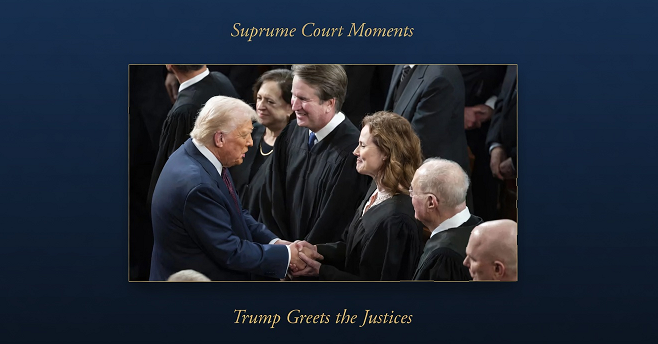
Writing for the Court, Justice Elena Kagan explained that Olivier’s lawsuit could proceed because it seeks only prospective relief, not to overturn his past conviction. She emphasized that when a plaintiff challenges a law to prevent future enforcement, rather than to invalidate a previous judgment, such claims are permissible. The Court concluded that Olivier’s case is “entirely future-oriented,” meaning the legal barrier established in Heck does not apply.
Olivier’s attorneys, including representatives from the First Liberty Institute, argued that the case has broader implications for free speech rights across ideological lines. They contend that individuals should have the opportunity to challenge laws they believe infringe upon constitutional freedoms, even if they have previously been penalized under those laws.
The city of Brandon defended its ordinance, stating that the restrictions were not based on religion and had previously survived legal scrutiny. City officials also argued that Olivier had other avenues to contest the law. Nonetheless, the Supreme Court’s decision opens the door for renewed legal challenges, raising concerns among local governments about potential increases in lawsuits over similar regulations.
Importantly, the ruling does not determine whether the ordinance itself is unconstitutional. Instead, it ensures that Olivier can pursue his claim in court. The case may now proceed through the lower courts, where judges will evaluate whether the protest zone restrictions violate the First Amendment protections of free speech.