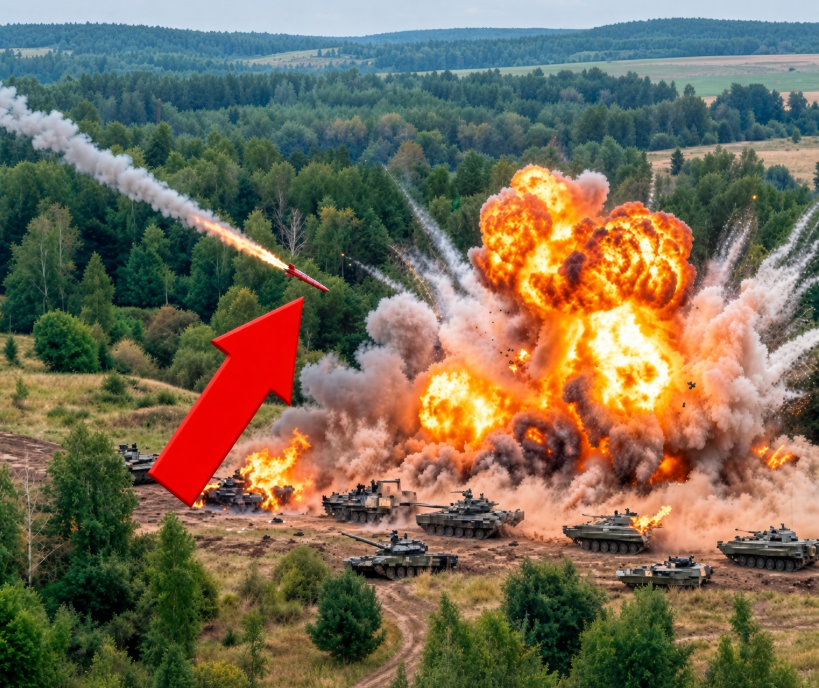
At 05:40 on September 6, a Russian 12-vehicle column rolled toward Ivanivka led by a T-90M “Proryv” — the tank Putin called “the best in the world, without any exaggeration.” Seven Ukrainian drones costing less than $6,000 in total were waiting for it.
The column never reached the trenches. It retreated with eight vehicles and no commander. Kharkiv Oblast, 7 kilometers southeast of Vovchansk. Two Ukrainian reconnaissance operators have been watching a tree line for three days when a Russian 2S3 Akatsiya battery begins shelling their exact position — not because they were spotted, but because they are standing right where the preparatory fire is falling. The column moves out: a T-90M taking the point, two T-72B3s in echelon, two BMP-2s on the flanks. Every tank is covered in explosive reactive armor (ERA) and a hand-welded metal cage over the turret, approved in some field workshop as “state-of-the-art anti-drone protection.” The first FPV drone doesn’t go for the tank: it targets the trailing BMP-2, with eight soldiers sitting behind 30mm of armor. Impact on the rear hatch, detonation of 500 rounds of 30mm ammunition stored inside. Eleven vehicles remain… This analysis covers modern drone warfare, Russian armored columns, ERA armor, cope cages, and the war in Ukraine.