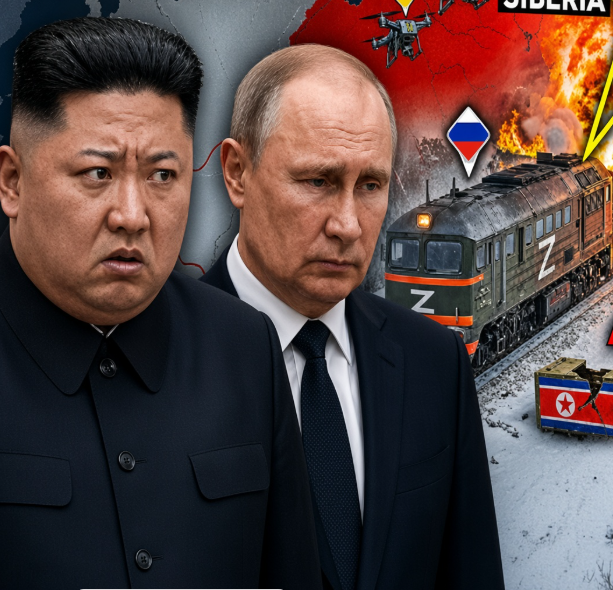
Ukraine may have targeted a major Russian supply route connected to North Korean weapons thousands of kilometers behind the front line. If confirmed, the reported sabotage of a military train deep in Siberia would represent one of the most distant attacks linked to the war and could disrupt an important part of the Russia–North Korea military supply network.
The reported cargo allegedly included North Korean KN-23 and KN-24 ballistic missiles as well as large quantities of artillery ammunition. Such weapons have become increasingly significant to Russia as Moscow seeks additional supplies to sustain its missile and artillery campaigns in Ukraine.
The operation highlights Russia’s growing military relationship with North Korea. Moscow has reportedly received artillery shells, ballistic missiles, and other forms of military assistance from Pyongyang, while North Korea gains economic benefits, battlefield experience, and access to Russian military technology.
The partnership is also expanding beyond weapons. Reports indicate that hundreds of suspected North Korean workers were hired by Russian companies, potentially raising questions about compliance with United Nations sanctions and providing Pyongyang with additional foreign currency.
Another development involves reports that North Korean missile personnel or systems are being integrated into Russian military infrastructure near Voronezh. If accurate, their proximity to Ukraine could make these assets potential targets as Kyiv expands its long-range strike capabilities.
The growing cooperation reflects a broader strategic exchange: Russia receives additional manpower and military supplies, while North Korea gains financial resources, technical knowledge, and practical experience from the conflict.
If the Siberian train attack is confirmed, it would demonstrate Ukraine’s expanding ability to target logistics far from the battlefield and could highlight vulnerabilities within the increasingly important Russia–North Korea military supply chain.