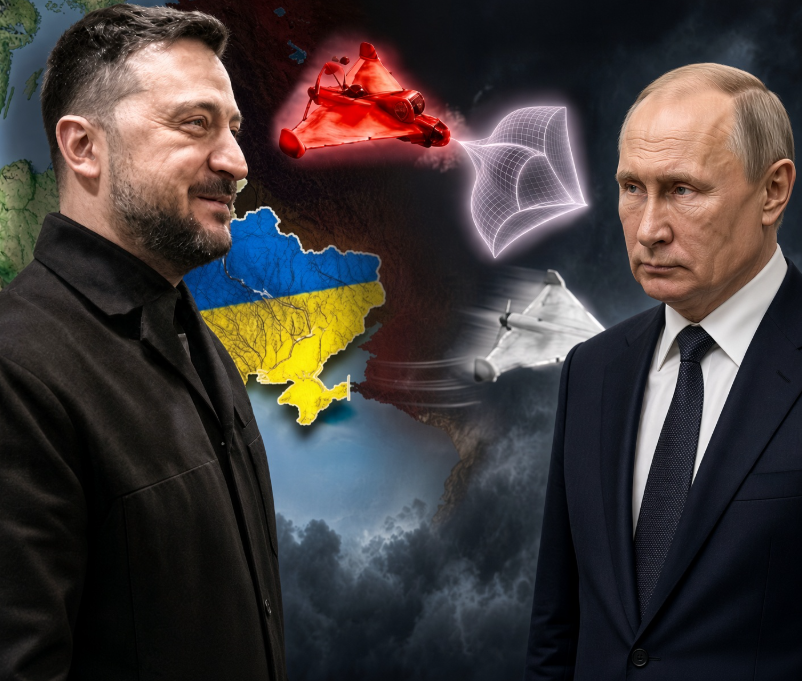
Ukraine’s efforts to counter Russian unmanned aerial vehicles are highlighting an alternative to conventional air defense: capturing or disabling drones without destroying them. The reported approach, described as “net warfare,” uses specialized interception systems designed to entangle an incoming drone and bring it down with less explosive force.
Systems identified in the account as Ptashka and MITLA 1 reportedly use net-firing mechanisms to intercept hostile UAVs. If a drone can be recovered intact, Ukrainian specialists may be able to examine its components, flight-control systems, navigation equipment, and onboard electronics. Such inspections can provide intelligence about manufacturing methods, communication links, and operational procedures, potentially helping defenders adapt their countermeasures.
Compared with missiles or explosive interceptors, net-based systems may reduce the risk of scattering dangerous debris or detonating a drone’s payload. However, they are not risk-free. Their effectiveness depends on interception distance, the target’s speed and size, environmental conditions, and the ability to deploy the system at the right moment. Capturing a drone intact also does not guarantee that its data will remain accessible or that all sensitive components will be recoverable.
The account also discusses Russia’s Volk-18 interceptor, described as an automated system intended to engage hostile drones. It alleges that limitations in range and target recognition have contributed to incidents involving Russian drones engaging friendly aircraft. These specific claims, including the alleged friendly-fire incidents, require independent confirmation.
The broader development reflects the rapid evolution of counter-drone warfare. Both sides are experimenting with electronic warfare, automated interception, physical capture systems, and intelligence gathered from recovered equipment. No single method provides a universal solution, and defenses must adapt as drone designs and tactics change.
Ultimately, net-based interception could offer a useful option for selected targets, particularly when preserving a drone for technical analysis is valuable. Its battlefield impact will depend on demonstrated performance under real combat conditions.