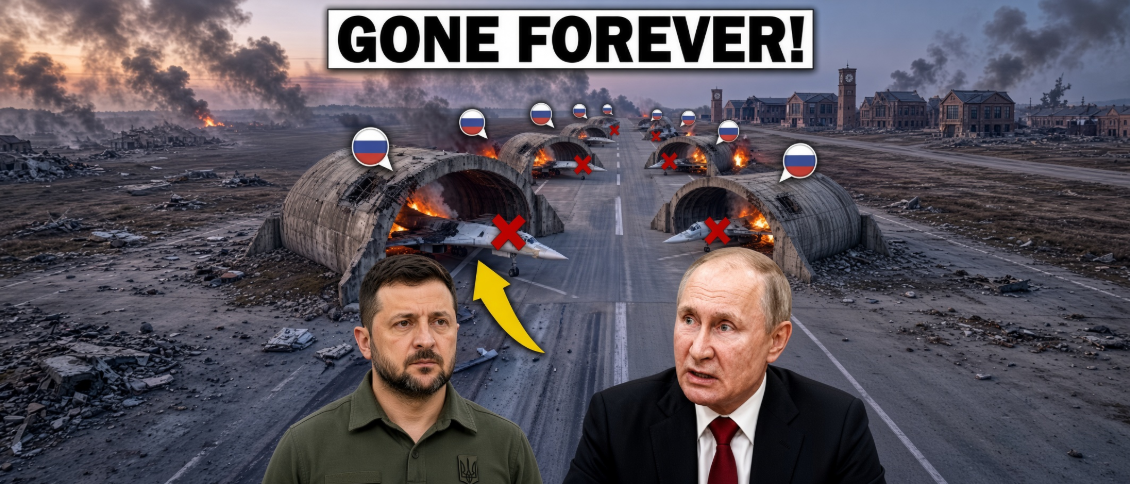
Ukraine’s reported use of heavy-payload drones against Russian airbases in occupied Crimea has renewed attention on the vulnerability of aircraft shelters and the challenges of protecting high-value military equipment. The account describes a strategy focused on striking aircraft, infrastructure, and support facilities, aiming to impose significant costs without relying on conventional air superiority.
One central claim is that Ukrainian drones have damaged or penetrated hardened aircraft shelters that were designed to protect Russian military assets from attack. Concrete shelters can provide meaningful protection, but their effectiveness depends on their construction, reinforcement, entrances, ventilation systems, and exposure to blast effects. Whether the reported drones have breached particular shelters—and how much damage they caused—requires independent verification.
The account also highlights the economic imbalance between inexpensive unmanned aircraft and advanced Russian fighters, including the Su-30. If a relatively low-cost drone destroys or seriously damages a modern combat aircraft, the attacker can impose a financial and operational loss far greater than the weapon’s purchase price. However, the cited $10,000 drone cost and $50 million aircraft value are estimates, and the actual cost of a successful strike includes development, intelligence, and operational support.
Repeated attacks could force Russian commanders to disperse aircraft, strengthen shelters, improve air defenses, or relocate assets farther from threatened areas. Each option involves trade-offs: dispersal and relocation can reduce vulnerability but may increase maintenance demands, complicate sortie generation, and lengthen missions.
Overall, the reported campaign illustrates the growing challenge that inexpensive drones pose to expensive military platforms. Nevertheless, claims that Crimea’s aircraft shelters have been systematically defeated or that Russia’s air fleet is undergoing a generational collapse remain unverified without evidence of confirmed aircraft losses and sustained operational effects.