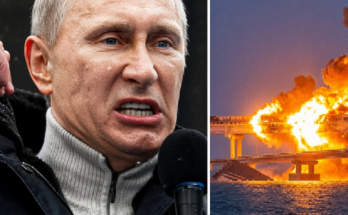
Ukraine’s Reported Territorial Gains and Deep Strikes Raise Questions About Russia’s War Effort
Ukraine’s reported battlefield advances in the Dnipropetrovsk region, combined with long-range strikes against Russian infrastructure, have fueled claims of mounting pressure on Moscow’s military and economy. The supplied account claims Ukrainian forces regained 745 square kilometers and 26 settlements, but these figures require independent verification before the scale of the gains can be established.
The analysis also describes a proposed 300-kilometer defensive line stretching from Izium to Orikhiv, reportedly combining drones, fortifications, and concrete barriers. Such defenses could help Ukraine monitor approaches, slow assaults, and protect key positions, although their effectiveness would depend on deployment, staffing, logistics, and the evolving battlefield.
Another major focus is the alleged use of Ukraine’s domestically developed Flamingo missiles against Russian energy infrastructure. The claim that these strikes have eliminated 42.7% of Russia’s oil-refining capacity is significant but unverified in the supplied material. Assessing the actual impact would require reliable data on damaged facilities, operating capacity, repairs, and production losses.
The report further links Russia’s battlefield challenges with alleged plans to recruit 500,000 additional troops during winter and a projected $78 billion budget deficit. Both figures need confirmation and context, including the relevant time period and accounting definitions.
Taken together, the claims portray a potential combination of territorial pressure, defensive preparation, infrastructure disruption, and economic strain. However, predictions of imminent Kremlin collapse go beyond the evidence provided. The true strategic impact depends on independently confirmed military developments and measurable, sustained effects on Russia’s war-making capacity.