Simulated Ukrainian Drone Strike Examines the Vulnerabilities of Russia’s Air Defenses
This military documentary presents a simulated Ukrainian long-range drone operation targeting the Kuibyshev Oil Refinery in Samara, Russia. The scenario explores how unmanned aircraft might challenge layered air defenses and threaten petroleum-processing infrastructure that could support Russia’s military and broader economy.
In the simulation, 12 Ukrainian FP-1 drones launch from near Kharkiv and travel approximately 650 miles into Russian territory. Russia’s Nebo-U radar detects the incoming formation, prompting a defensive response involving Su-35S fighter jets and ground-based air-defense systems. The drones then split into three groups, complicating the tracking and interception effort.
The scenario introduces a major complication when an alleged identification error leads an S-350 Vityaz battery to engage a Russian aircraft. Meanwhile, the remaining drones continue toward Samara, encountering additional interception attempts from S-350 missiles and Pantsir-S1 systems. The sequence illustrates the coordination challenges that arise when radar operators, fighter crews, and ground-based defenses must respond rapidly to multiple aerial threats.
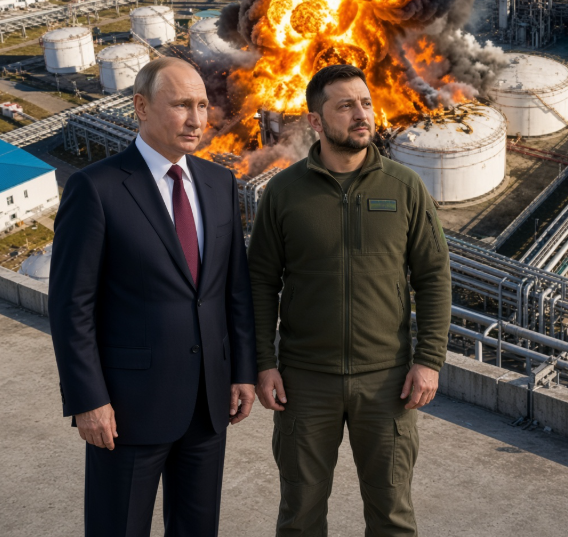
According to the simulated account, 10 drones are destroyed, while two penetrate the defensive network and strike the refinery’s primary distillation unit and liquefied petroleum gas processing area. The scenario depicts explosions, fires, and an emergency shutdown that could interrupt operations and require extensive inspections and repairs.
These events are presented as a simulation, not a verified account of an actual attack. The specific flight route, interception numbers, friendly-fire incident, and refinery damage should therefore not be treated as confirmed events.
The broader analysis highlights the potential vulnerability of critical energy infrastructure to long-range drones. It also demonstrates how even a heavily defended facility could face operational disruption if attackers overwhelm surveillance and interception systems. The real-world consequences would depend on confirmed damage, repair requirements, and the duration of any production outage.