Russia Reportedly Expands Air Defenses Around Putin’s Valdai Residence
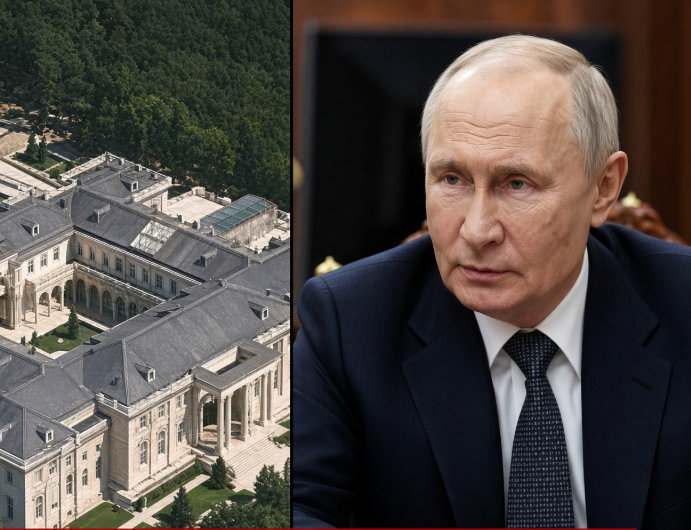
Russia has reportedly established more than 50 air-defense positions around President Vladimir Putin’s residence in Valdai, highlighting growing attention to protecting sensitive locations amid the ongoing war with Ukraine. According to the supplied account, satellite imagery indicates an expanding defensive network that may be intended to counter potential drone and missile attacks.
The reported construction raises questions about how Russian authorities are adapting security measures as long-range drones increasingly feature in the conflict. Air-defense deployments around important government facilities can serve several purposes, including intercepting incoming threats, protecting critical infrastructure, and strengthening security around senior leadership. However, the precise capabilities and effectiveness of the reported positions cannot be determined from the description alone.
The expansion is also linked in the account to disputed claims about an alleged Ukrainian attack targeting Putin’s residence. Kyiv has denied the accusation, and the circumstances surrounding the claim would require independent verification. The reported defensive build-up does not, by itself, establish that an attack occurred or confirm the Kremlin’s specific assessment of the threat.
If the reported installations are confirmed, their number, locations, and equipment could offer insight into Russia’s approach to protecting high-profile sites. At the same time, interpreting satellite imagery requires care: visible structures may indicate defensive preparations, but imagery alone cannot establish the intended targets, operational readiness, or the reasoning behind their construction.
The key questions are whether the reported positions have been independently verified, what systems they contain, and how they fit into Russia’s broader air-defense network. Until those details are established, the Valdai developments should be understood as reported security preparations rather than proof of an imminent attack or a confirmed breach of presidential security.