Ukraine’s Reported Deep Strike Raises Questions About Russian Airbase Security
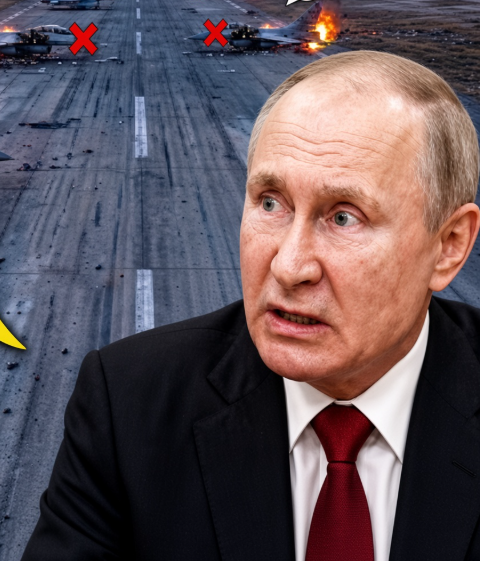
Ukraine has reportedly carried out a long-range drone operation against Shagol airbase, with the supplied account claiming the target was approximately 1,700 kilometers from Ukrainian territory. The report alleges that Ukrainian drones penetrated Russian electronic-warfare and air-defense systems to reach the facility. The distance, strike details, and effectiveness of the reported defenses require independent verification.
The most significant claim concerns Russia’s Su-57 fifth-generation stealth fighters, which the account says were targeted and destroyed. These aircraft are among Russia’s most advanced combat platforms, and any confirmed damage or loss could have implications for operational planning and aircraft availability. However, the supplied information does not establish how many aircraft were hit, whether they were destroyed, or the extent of any damage.
The incident also raises broader questions about the vulnerability of military aviation infrastructure far from active battle lines. Long-range drones can challenge traditional assumptions about geographic distance and rear-area security, particularly when defenders must protect numerous airfields, aircraft shelters, fuel supplies, and maintenance facilities. Their effectiveness depends on factors such as navigation, payload, intelligence, and the ability to penetrate layered defenses.
If confirmed, a successful strike on a strategically important airbase could force Russian planners to reassess aircraft dispersal, hardening, and air-defense coverage. It would not, by itself, establish that Russian bases are universally vulnerable or that the Su-57 fleet cannot be replenished.
For now, the reported operation should be viewed as an allegation pending reliable confirmation of the target, aircraft losses, and damage. Those details are essential to assessing the strike’s actual military significance.