British Heavy Armor Tested in Ukraine
This compilation examines the reported battlefield performance of Britain’s Challenger 2 tanks in Ukraine, bringing together three analyses covering operations around Robotyne and the Kursk axis. It explores how the tank’s long-range firepower, protective design and advanced targeting systems have been adapted to the realities of modern drone warfare.
The first segment examines the Challenger 2’s L30A1 rifled gun, Dorchester composite armor and hunter-killer targeting capabilities, explaining how these features support precision engagements and crew protection. The second focuses on a tank nicknamed “Baby,” which reportedly survived attacks involving Lancet drones, Kornet anti-tank missiles, FPV drones and artillery while continuing to operate.
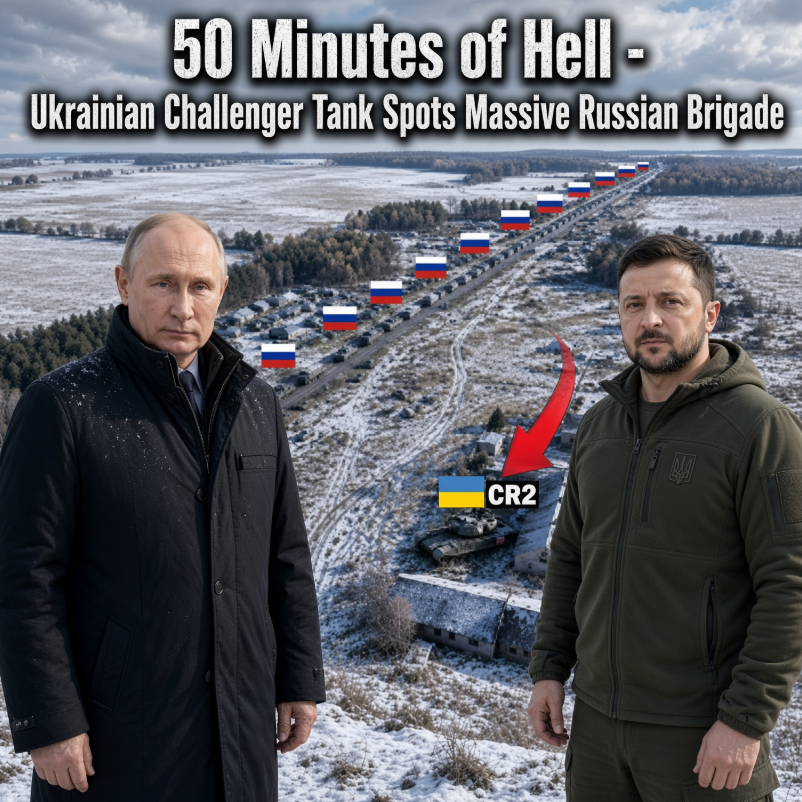
The final segment examines an alleged long-range engagement near the Kursk front, where a Challenger 2 reportedly used targeting information supplied by drones to engage Russian armored vehicles before withdrawing to avoid return fire.
Across the three segments, the analysis highlights the importance of accurate intelligence, coordinated operations, protective measures and rapid movement. It also compares Western heavy armor with Russian T-72, T-80 and T-90 variants, while considering the challenges tanks face from increasingly sophisticated unmanned systems.
The compilation concludes by looking toward the Challenger 3 program and the lessons Ukraine’s battlefield experience may offer NATO. Its central argument is that tanks have not become obsolete, but their survival and effectiveness increasingly depend on adapting armor, tactics and supporting technology to a battlefield dominated by drones and precision weapons.