Political controversy surrounding Elizabeth Warren following the collapse of Spirit Airlines and renewed criticism from Republican lawmakers over her role in opposing the proposed merger between Spirit and JetBlue Airways in 2024.
The dispute emerged after Spirit Airlines shut down operations, leaving thousands of passengers stranded and approximately 14,000 employees without jobs. Republican critics argue that Warren’s efforts to block the merger directly contributed to Spirit’s inability to remain financially viable. Bernie Moreno sharply criticized Warren on social media, claiming that the airline’s workers, travelers, and investors could “thank” her for the collapse. He framed the incident as an example of what he described as the negative consequences of allowing politicians with limited private-sector business experience to influence economic decisions. Ted Cruz also joined the criticism, pointing to Warren’s previous opposition to the merger as evidence of misguided intervention.
Warren, however, strongly defended her position. She argued that Spirit’s bankruptcy stemmed primarily from rising fuel prices and broader economic pressures, which she linked to foreign policy and energy market disruptions under Donald Trump. She also emphasized that the merger was blocked not simply because of her advocacy, but because a federal judge—appointed by Ronald Reagan—determined that the deal violated antitrust law.
The merger between JetBlue and Spirit had been a major issue in airline industry regulation. Warren had consistently argued that allowing the two carriers to combine would reduce competition and likely result in fewer consumer choices and higher ticket prices. She urged the Justice Department and Transportation Department under Joe Biden to block the transaction. The Biden administration’s Justice Department ultimately succeeded in preventing the merger, with antitrust officials arguing that preserving Spirit as an independent low-cost competitor would better serve consumers.
Warren publicly celebrated the decision at the time, calling it a win for travelers and warning against further consolidation in the airline sector. She has frequently argued that the dominance of the “Big Four” airlines—American Airlines, Delta Air Lines, Southwest Airlines, and United Airlines—already limits competition and contributes to higher fares.
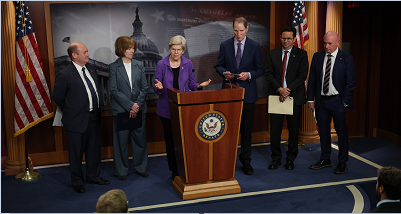
The passage also highlights Warren’s broader progressive positions, particularly her opposition to expanded funding for Immigration and Customs Enforcement. In a fiery Senate speech, she condemned proposed ICE funding increases, arguing that the agency’s enforcement tactics harm communities and should not receive further financial support.
Overall, the article presents the Spirit Airlines shutdown as both an economic event and a political flashpoint. It underscores ongoing ideological divisions over antitrust regulation, corporate consolidation, government intervention, and broader policy debates that continue to shape public and partisan discourse.