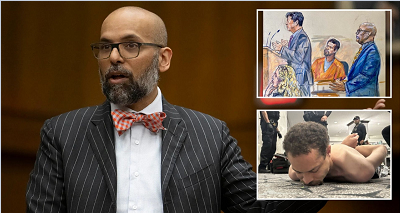
Court hearing in which Zia Faruqui strongly criticized the detention conditions of Cole Allen, a man accused of attempting an attack at the White House Correspondents’ Dinner. While the case itself involves serious allegations, the hearing focused primarily on whether Allen’s treatment in custody met legal and constitutional standards.
During the proceedings, Judge Faruqui expressed concern that Allen had been held under excessively harsh conditions that may violate the principle that defendants are presumed innocent before trial. He stated that it is the court’s responsibility to ensure that pretrial detention is carried out safely and fairly, and he apologized directly to Allen, saying those standards did not appear to have been met in this case.
According to details presented in court, Allen had been placed in a padded cell under near-constant observation, with limited access to phone calls, reading materials, and recreation. Faruqui questioned whether these restrictions were justified, suggesting they resembled punitive measures rather than necessary precautions. He noted that such conditions typically require medical or safety justification, which he said did not appear to be clearly supported.
Officials from the D.C. Department of Corrections defended their actions, arguing that the restrictions were implemented for Allen’s safety, particularly due to statements he allegedly made suggesting he did not expect to survive the incident. However, the judge pointed out that medical professionals had not confirmed a need for such extreme measures, raising doubts about whether the decisions were appropriately based on clinical evaluations.
Faruqui also compared Allen’s treatment to that of defendants involved in the January 6 Capitol riot, noting that many of those individuals, despite facing serious charges, were eventually held under less restrictive conditions. This comparison raised concerns about consistency and fairness in how detainees are treated, particularly in high-profile or politically sensitive cases.
The judge broadened the issue by questioning how less visible detainees are treated, suggesting Allen’s situation could reflect systemic problems within the detention system.
He ordered jail officials to provide updates and consider moving Allen to less restrictive housing, warning that alternative arrangements might be required if conditions do not improve.
Overall, the case highlights the tension between ensuring public safety and protecting defendants’ rights. While the charges against Allen remain unresolved, the court made clear that detention practices must adhere to legal standards and will be closely scrutinized moving forward.