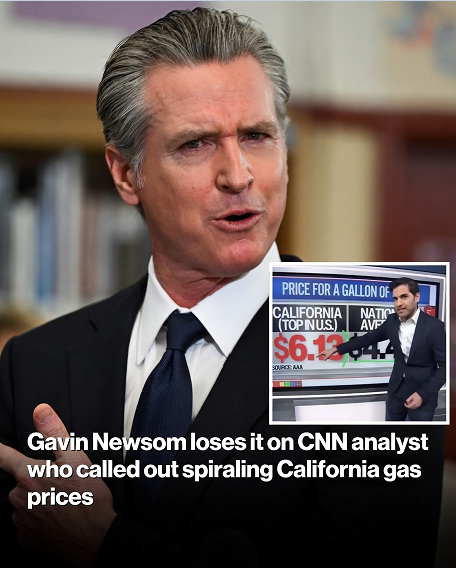
Public exchange between Gavin Newsom and commentators on CNN over the causes of California’s high gasoline prices, which remain the highest in the United States.
During a segment on CNN’s “Margins of Error,” analyst Harry Enten highlighted the unusually high cost of fuel in California compared to the national average. He pointed to state-level factors, particularly fuel taxes and regulatory fees, which he said total about 71 cents per gallon—more than double the national average of around 33 cents. Enten also referenced polling data indicating that a majority of Californians are dissatisfied with the added costs associated with the state’s environmental policies, suggesting many residents feel the financial burden outweighs the benefits.
In response, Governor Newsom’s office pushed back strongly, disputing the idea that state policies are the primary driver of high gas prices. Instead, his office attributed rising costs to broader global factors, particularly actions by Donald Trump related to conflict involving Iran. According to this argument, disruptions in global oil supply have driven up fuel prices nationwide, and California’s increases are part of that larger trend.
Newsom’s office also emphasized that the price gap between California and the national average has not widened as much as critics suggest, noting that other states have also experienced significant price increases. Additionally, they defended California’s gas taxes, pointing out that voters approved them in 2018 to fund infrastructure improvements such as road repairs, bridge maintenance, and environmental initiatives. Officials stressed that these taxes have not increased in response to recent global events.
Critics, however, continue to argue that California’s environmental regulations and refinery constraints contribute to limited fuel supply within the state, putting upward pressure on prices.
Overall, the debate reflects two competing explanations: one focusing on state-level policies like taxes and environmental rules, and the other pointing to global market forces and geopolitical developments as the main drivers behind rising gas prices.