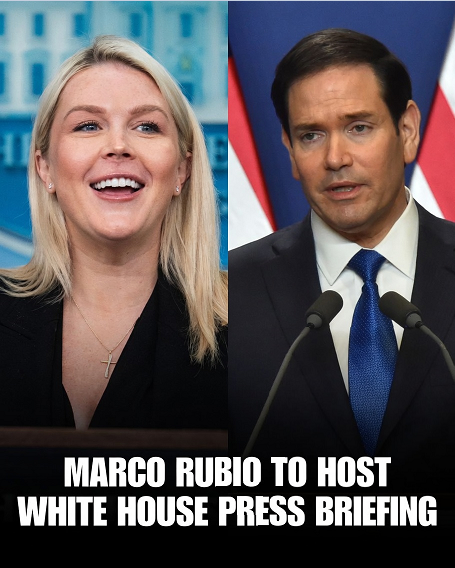
Marco Rubio is temporarily stepping into a highly visible communications role at the White House while Karoline Leavitt is on maternity leave. Rubio is scheduled to address reporters directly from the White House Briefing Room at 3 p.m. Eastern Time, marking an unusual but significant appearance for a sitting Secretary of State.
Normally, White House press briefings are led by the press secretary, whose role is to communicate the administration’s positions, respond to questions from journalists, and manage public messaging on domestic and international issues. Cabinet officials occasionally appear in the briefing room for specialized discussions, but it is relatively uncommon for a Secretary of State to assume the central briefing role, even temporarily. Rubio’s appearance therefore carries both symbolic and political significance.
The briefing is expected to cover a wide range of issues facing the administration, including foreign policy developments, national security concerns, diplomatic priorities, and potentially domestic political matters that intersect with international affairs. Because Rubio serves as the nation’s top diplomat, reporters are likely to focus heavily on global tensions, military conflicts, trade relationships, and U.S. alliances abroad.
Rubio’s participation also highlights his growing profile within the administration. Since taking office as Secretary of State, he has become one of the administration’s leading public voices on international affairs. His appearance at the White House podium reflects a broader effort to maintain continuity in public communication while Leavitt is away and demonstrates the administration’s confidence in Rubio’s ability to handle direct media engagement.
Meanwhile, Leavitt’s temporary absence due to maternity leave has drawn attention because of her prominent role in daily White House operations. As press secretary, she regularly serves as the administration’s chief spokesperson, often fielding difficult questions from the national press corps. Rubio stepping in for the briefing underscores the importance the White House places on maintaining a strong public presence and clear messaging during her leave.
The event is expected to draw substantial media interest, especially given the unusual nature of the arrangement and the possibility of major policy announcements or clarifications. News organizations across the political spectrum are planning live coverage of the briefing, with viewers able to follow developments through official White House channels and major television networks.
Overall, Rubio’s briefing represents more than a routine press appearance. It reflects the administration’s effort to project stability, maintain communication with the public, and elevate key officials during a period of significant political and international attention.