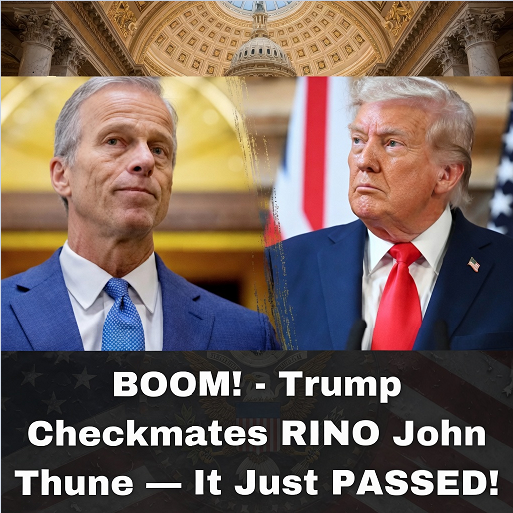
Donald Trump has renewed pressure on Senate Republicans to eliminate the Senate filibuster, arguing that the rule is blocking major parts of his legislative agenda as Republicans prepare for the 2026 midterm elections. The filibuster requires 60 votes in the Senate to advance most legislation, meaning Republicans cannot pass controversial bills without some Democratic support unless the rule is changed.
Trump’s frustration centers largely on the stalled SAVE Act, a Republican-backed proposal formally known as the Safeguarding American Voter Eligibility Act. The legislation would require proof of U.S. citizenship to register to vote and would tighten rules surrounding mail-in voting. Trump and many conservatives view the measure as critical for election security, while critics argue it could make voter registration more difficult for eligible citizens.
During remarks Tuesday, Trump said he was disappointed Senate Republicans had not moved to abolish the filibuster. Although he praised Senate Majority Leader John Thune personally, Trump blamed a handful of Republican senators for blocking efforts to change Senate rules. He did not identify specific lawmakers but suggested some GOP members were undermining Republican priorities.
Trump argued that without the filibuster, the SAVE Act would already have passed. He also repeated his criticism of widespread mail-in voting, claiming Democrats rely heavily on such systems to win elections. At the same time, Trump warned Republicans that Democrats could eventually abolish the filibuster themselves if they regain Senate control.
Despite Trump’s demands, most Senate Republicans remain reluctant to eliminate the rule. Many lawmakers from both parties have historically defended the filibuster as an important protection for the minority party, preventing rapid swings in federal law whenever control of Congress changes hands. Republicans also worry that removing the filibuster could backfire if Democrats later regain power and pass sweeping legislation without GOP support.
While Congress remains divided over federal election legislation, several Republican-led states have advanced their own voting rules. States including Florida, Mississippi, Utah, and South Dakota have recently passed laws requiring documentary proof of citizenship for voter registration in state and local elections. Similar legislation is also advancing in Tennessee under Governor Bill Lee.
Other states are considering ballot initiatives or legal changes aimed at strengthening voter identification requirements and clarifying that only U.S. citizens may vote in elections. Measures are expected to appear before voters in states including Arkansas, Arizona, Kansas, and Alaska.
Meanwhile, Trump signed an executive order on March 31 directing the Department of Homeland Security and other agencies to help create a federal list of confirmed U.S. citizens. The order also seeks to withhold federal funding from jurisdictions that fail to comply with certain election-related requirements. Democratic lawmakers and multiple states have since filed lawsuits challenging the legality of the executive action.
The broader debate highlights growing national divisions over election law, Senate procedure, and the balance between federal authority and state control ahead of another highly contested election cycle.