A major campaign finance case that the Supreme Court of the United States has agreed to hear, involving a Republican-led challenge to federal restrictions on coordinated political spending between candidates and political parties. The case centers on whether these spending limits violate protections for free speech and political association under the First Amendment.
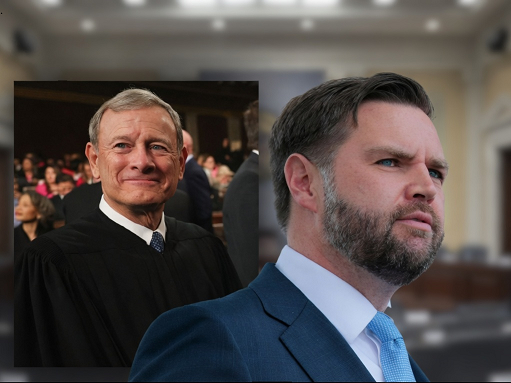
One of the key figures in the lawsuit is JD Vance, who originally joined the case while running for the U.S. Senate in Ohio. Vance, along with the National Republican Senatorial Committee and the National Republican Congressional Committee, argues that current federal law unfairly limits how closely political parties can work with their own candidates during campaigns.
At issue are “coordinated expenditures,” meaning spending carried out by political parties in direct cooperation with candidates. Under existing federal law, independent spending by outside groups or parties is generally unlimited if done without coordinating with candidates. However, spending done in coordination with candidates remains capped under rules established by the Federal Election Campaign Act of 1971 and later amendments.
The plaintiffs argue these restrictions interfere with the constitutional right of political parties and candidates to associate freely and advocate together. They claim the law prevents parties from fully supporting their own nominees during elections.
The case is closely connected to the Supreme Court’s landmark 2010 ruling in Citizens United v. Federal Election Commission. That decision struck down limits on independent political spending by corporations and organizations, holding that political spending is protected speech under the First Amendment. However, the Court at that time did not eliminate restrictions on coordinated spending between parties and candidates, leaving those limits in place.
A lower federal appeals court in Cincinnati previously upheld the coordinated spending restrictions in 2024, relying on an earlier 2001 Supreme Court precedent involving campaign finance rules in Colorado. The appeals court stated it was bound to follow existing Supreme Court decisions supporting such limits.
The challengers are now asking the Supreme Court to overturn that earlier precedent, arguing that changes in campaign finance law and evolving First Amendment rulings have weakened the legal basis for coordinated spending restrictions.
The article also notes that the United States Department of Justice under the Trump administration supports Vance and the Republican committees. Meanwhile, Democratic organizations including the Democratic National Committee, Democratic Senatorial Campaign Committee, and Democratic Congressional Campaign Committee intervened to defend the current law.
The Supreme Court’s eventual ruling could significantly reshape campaign finance rules in the United States by determining whether political parties may spend unlimited amounts in direct coordination with candidates.