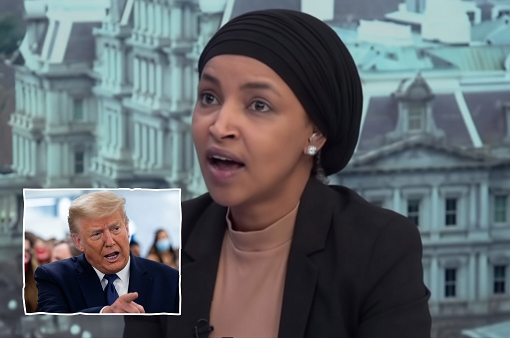
Escalating political conflict between Donald Trump and Ilhan Omar, focusing on immigration, citizenship, and refugee policy. The piece blends factual background with commentary and politically charged rhetoric, particularly regarding Somali immigrants and Omar’s role in Congress.
The dispute resurfaced after Omar said during an appearance on The Dean Obeidallah Show that she was not worried about losing her U.S. citizenship or being deported to Somalia. Omar explained that while she fled Somalia as a child during civil war, she is now an adult with grown children and does not view deportation threats as personally frightening. Her remarks were interpreted by supporters as an attempt to reject intimidation tactics and by critics as dismissive of concerns about citizenship and immigration enforcement.
Soon afterward, the White House reposted a photo of Trump waving from a McDonald’s drive-thru window, which many online interpreted as a mocking “goodbye” message aimed at Omar. The image quickly spread across social media and intensified the political confrontation between Trump allies and progressive lawmakers.
Trump later expanded on his criticism while speaking to reporters aboard Air Force One. He referenced longstanding allegations that Omar entered the United States through marriage fraud involving her brother, claims that Omar has repeatedly denied and that have never resulted in criminal charges. Trump argued that if such allegations were true, she should not remain in Congress. He also criticized Somali immigration more broadly, saying Somali refugees had created financial and social burdens for the United States.
The remarks drew immediate backlash from critics who accused Trump of unfairly targeting immigrants and using rhetoric that generalized an entire refugee community based on political disagreements. Supporters of Trump argued that he was raising legitimate questions about immigration policy, refugee screening, and national loyalty.
The article also revisits Trump’s history of clashes with progressive lawmakers known as “the Squad,” which includes Omar and several other left-leaning Democratic representatives. During his presidency, Trump repeatedly accused Omar of being “anti-American” and previously told members of the group to “go back” to the countries they came from, comments widely condemned by critics as xenophobic. Omar responded to the renewed attacks by calling Trump a “lying buffoon” and rejecting his statements about Somalia and deportation.
The White House reportedly stood by Trump’s latest remarks, with aides arguing that the president was emphasizing that immigrants benefiting from American opportunities should show appreciation and respect for the country. Critics, however, viewed the comments as inflammatory and divisive, particularly because Omar became a U.S. citizen legally after her family fled Somalia’s civil war and spent years in a refugee camp in Kenya before resettling in America.
The broader political backdrop includes ongoing national debates over immigration enforcement, refugee resettlement, border security, and citizenship. The article notes that the renewed focus on refugee policy came amid concerns following a violent incident involving an Afghan refugee during the Thanksgiving holiday period, which reignited arguments over migrant screening procedures.
Overall, the dispute reflects deeper divisions in American politics over identity, immigration, patriotism, and the role of refugees in American society. For supporters, Trump’s remarks reinforce his tough stance on immigration and national security. For critics, they represent a continuation of rhetoric that targets immigrants and minority communities for political gain.