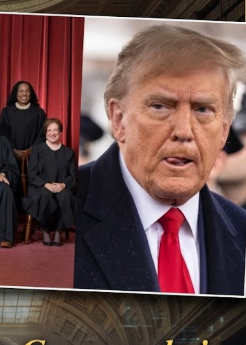
Republican leaders in Congress have called on Chief Justice John Roberts to investigate whether federal judges violated judicial ethics rules by anonymously criticizing the Supreme Court’s handling of Trump-related cases. Senate Judiciary Committee Chairman Chuck Grassley and House Judiciary Committee Chairman Jim Jordan sent a letter to Roberts on November 5, 2025, arguing that several anonymous remarks from lower court judges may have undermined public confidence in the judiciary.
The controversy stems from interviews conducted by major media outlets during 2025. In one report, NBC News interviewed 12 federal judges appointed by presidents from both political parties, including some appointed by Donald Trump. Many expressed frustration with the Supreme Court’s increasing use of emergency rulings—often called the “shadow docket”—to decide major disputes involving the Trump administration. According to the reports, the Supreme Court sided with the administration in roughly 80% of those emergency cases, frequently issuing decisions with little or no explanation.
Several judges warned that the lack of detailed reasoning made it difficult for lower courts to interpret and apply Supreme Court precedent consistently. Some described the relationship between lower courts and the Supreme Court as a “war zone,” while others accused the high court of effectively helping the Trump administration weaken the authority of district judges. A later New York Times survey of more than three dozen judges echoed concerns about what some called a growing “judicial crisis.”
Grassley and Jordan argued that even anonymous comments could violate the Code of Conduct for United States Judges. Their letter cited several judicial ethics principles, including rules requiring judges to preserve the integrity and impartiality of the courts and avoid public comments on pending matters. The lawmakers warned that criticism of the Supreme Court from sitting judges—especially when leaked anonymously to the media—could damage trust in the judicial system.
The dispute also reflects broader tensions surrounding the Supreme Court’s emergency docket. During Trump’s second term, the administration increasingly relied on emergency appeals to quickly reverse lower court rulings on issues such as immigration, federal agency authority, and education policy. Critics, including some Supreme Court justices, argued that the rapid decisions lacked transparency and created confusion for lower courts trying to follow precedent.
Chief Justice Roberts has previously defended judicial independence and warned against politicizing the courts. However, as of March 2026, no public response to the congressional letter had been issued. While a formal ethics investigation appears uncertain, the debate has intensified concerns about transparency, judicial conduct, and the growing influence of the Supreme Court’s emergency rulings on the federal judiciary.