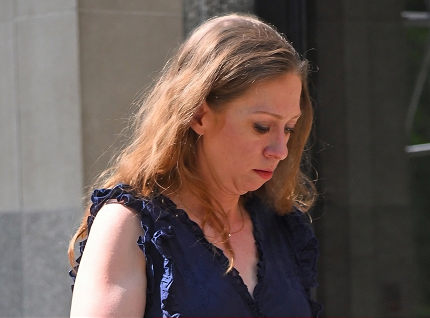
Chelsea Clinton recently opened up about reaching a personal and physical breaking point after years of nonstop work, advocacy, travel, public speaking, and parenting responsibilities. Speaking candidly in front of cameras, she revealed that a routine medical appointment led her doctor to warn her about what was described as “extreme exhaustion.” While there was no major illness or dramatic medical emergency, the moment forced her to confront the toll that constant pressure and overwork had taken on her body and mind.
What surprised many people was not the diagnosis itself, but Clinton’s honesty about how long she had ignored the warning signs. She explained that she had gradually accepted exhaustion as a normal part of life. Balancing professional commitments, family responsibilities, and public advocacy left little room for rest or recovery. Over time, fatigue became routine, and basic self-care was repeatedly pushed aside in favor of meeting obligations and maintaining a demanding schedule.
According to Clinton, the doctor’s comment about “extreme exhaustion,” though partly delivered in a lighthearted way, felt like a wake-up call. It made her realize that the pace she had set for herself was unsustainable. Rather than hiding the experience or downplaying it, she decided to speak openly in hopes of encouraging others to recognize burnout before it becomes overwhelming.
She described burnout as something that often develops quietly over time. Symptoms such as brain fog, irritability, emotional numbness, chronic fatigue, and difficulty recovering even after sleep can easily be dismissed or normalized. Clinton emphasized that many people continue pushing through these warning signs because they feel obligated to keep performing, helping others, or meeting expectations.
Her message focused on the importance of setting boundaries and prioritizing health before reaching a crisis point. She encouraged people to learn how to say no, ask for support when needed, and stop treating personal well-being as an afterthought. Instead, she argued that physical and mental health should be viewed as essential infrastructure that supports every other aspect of life.
Clinton’s story resonated with many because it challenged the idea that strength means endlessly enduring pressure without rest. She suggested that real strength can sometimes mean recognizing limits, slowing down, and allowing oneself time to recover. By sharing her experience publicly, she transformed a personal moment of exhaustion into a broader conversation about burnout, balance, and the importance of listening to both physical and emotional warning signs before they become impossible to ignore.