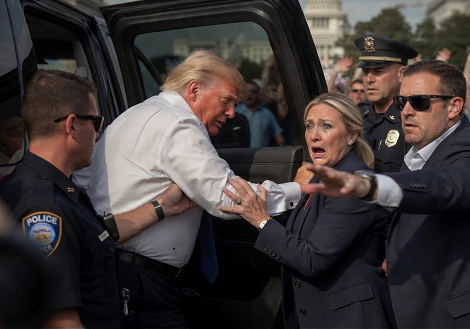
President Donald Trump had been involved in a second shooting incident in Washington, D.C. The posts spread rapidly across multiple platforms, using urgent and emotionally charged language that prompted widespread public concern and thousands of reactions within a short period of time. Despite the speed at which the story circulated, subsequent examination revealed that the claims were entirely false, underscoring the growing problem of misinformation in the digital age.
One of the clearest indicators that the reports lacked credibility was the complete absence of confirmation from official authorities. Neither the United States Secret Service nor any law enforcement agency issued statements, alerts, or emergency briefings concerning such an event. In addition, major national and international news organizations—which closely monitor developments involving high-profile political figures—published no verified reports supporting the allegations. In situations involving national security or attacks on public figures, official communication and rapid media coverage are usually immediate, making the silence from credible institutions especially significant.
Investigations into the origin of the rumor suggest that many of the viral posts relied on recycled videos and photographs from unrelated past events. These older images were reposted with misleading captions designed to create the appearance of a new crisis. Analysts note that this tactic is commonly used by anonymous or low-credibility accounts seeking attention, engagement, or political influence through sensational content. Because social media algorithms tend to amplify emotionally charged material, false information can spread widely before fact-checkers and journalists have time to respond.
Public confusion may also have been influenced by the genuine assassination attempt against Donald Trump in Butler, Pennsylvania, during 2024. That incident was thoroughly documented and led to heightened security measures around the former president. However, no comparable evidence exists regarding the recent Washington claims.
Overall, the episode highlights the dangers of today’s fast-moving digital environment, where viral content often spreads faster than verified reporting. It serves as a reminder of the importance of checking multiple trusted sources, relying on official information, and resisting the urge to share dramatic headlines before confirming their authenticity.