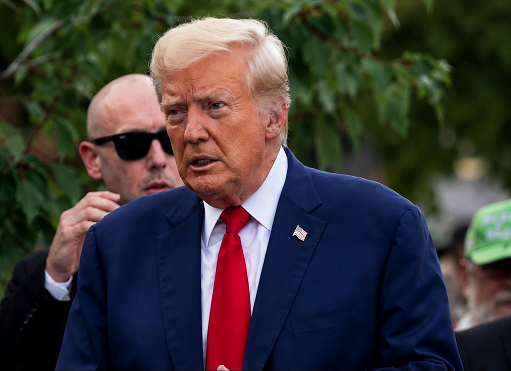
President Donald Trump has introduced new measures aimed at tightening restrictions on non-citizens’ access to the U.S. financial system as part of a broader immigration enforcement strategy. The policy changes come through an executive order tied to the Bank Secrecy Act, directing the Treasury Department and federal financial regulators to provide banks with updated guidance for identifying customers and transactions that could pose risks such as money laundering, terrorism financing, labor trafficking, or fraud.
The administration says the goal is to protect the integrity of the U.S. financial system and strengthen customer identification standards. According to the order, financial institutions should pay closer attention to “red flags and typologies” associated with suspicious activity. These include repetitive cash withdrawals, shell companies that conceal true account ownership, and platforms allegedly used for off-the-books wage payments.
The order also highlights the use of Individual Taxpayer Identification Numbers, or ITINs, as potential indicators for additional scrutiny. ITINs are issued to individuals who are not eligible for Social Security numbers but still need to file taxes legally in the United States. Critics argue that targeting ITIN use could make it significantly harder for immigrants, particularly undocumented individuals, to access basic banking services, mortgages, or credit, even when they are complying with tax laws.
The White House defended the policy by claiming that weaknesses in customer identification systems have allowed criminal organizations, drug traffickers, and money-laundering networks to exploit U.S. banks. Officials also argued that extending credit to undocumented immigrants and underreporting wages for undocumented workers can indirectly increase costs for American consumers through higher fees and interest rates.
Economists, however, generally attribute higher borrowing costs to broader economic conditions such as Federal Reserve benchmark rates, inflation, bank funding expenses, and borrower credit risk rather than immigration-related lending. Research from the Urban Institute indicates that only a relatively small number of mortgages are issued to ITIN holders, and major mortgage institutions such as Fannie Mae and Freddie Mac are already cautious about backing those loans.
The executive order also instructs the Treasury Department to explore additional regulatory changes that would allow banks to collect more customer information, including immigration and employment status. These actions arrive amid a wider immigration crackdown and broader financial policy changes under Trump, including deregulation efforts and strong support for cryptocurrency development, with Trump promoting the United States as a future global center for digital assets.