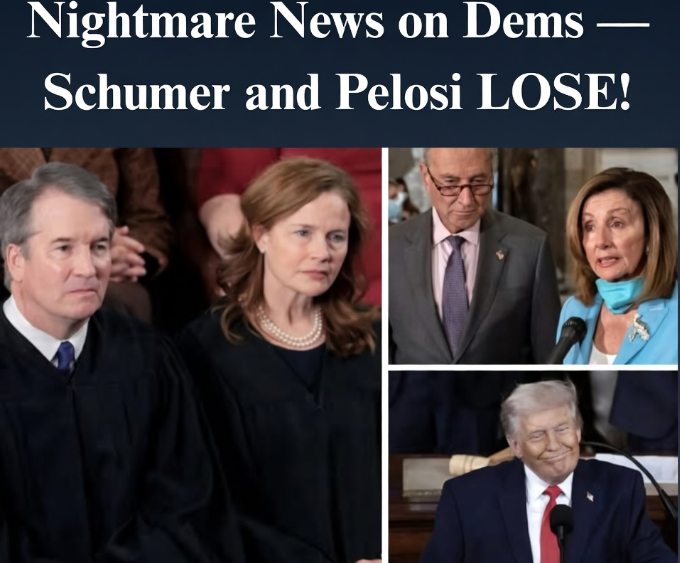
The Louisiana v. Callais centers on a challenge to Louisiana’s congressional redistricting plan and could significantly reshape how the Voting Rights Act of 1965 is applied in election disputes. At issue is a map adopted by state lawmakers that created a second majority-Black district after earlier legal challenges argued that the original plan diluted minority voting power. The case focuses on Section 2 of the law, which allows individuals and organizations to sue over voting practices that may disadvantage minority groups.
Since the Supreme Court’s decision in Shelby County v. Holder removed the preclearance requirement for certain states, Section 2 has become the primary mechanism for challenging redistricting plans. The current dispute raises fundamental questions about whether and how race can be considered when drawing congressional districts without violating the Equal Protection Clause.
The justices have signaled the importance of the case by ordering it to be reargued, suggesting they may reconsider established legal standards. During oral arguments, they examined whether the creation of majority-minority districts conflicts with constitutional protections. Chief Justice John Roberts emphasized consistency with prior rulings, including Allen v. Milligan and Thornburg v. Gingles, which set criteria requiring plaintiffs to show minority groups are large, cohesive, and affected by majority bloc voting. Meanwhile, Justice Brett Kavanaugh raised the idea of limiting race-based remedies over time through a potential “sunset” approach.
Legal analysts believe the Court could either narrow Section 2’s scope or establish new standards for evaluating redistricting challenges. Such a ruling would have nationwide implications, especially in states where one party controls both the legislature and governorship. States like Georgia, South Carolina, Tennessee, Missouri, and Florida could see new congressional maps depending on the outcome.
Advocacy groups warn that weakening Section 2 could enable partisan gerrymandering that benefits Republicans, potentially affecting dozens of districts and long-term control of the House of Representatives. At the same time, some states are exploring their own voting rights protections. Lawmakers such as Zakiya Summers and Johnny DuPree have proposed state-level versions of voting rights laws.
The timing of any changes is also uncertain. The Court may invoke the Purcell principle, which discourages altering election rules close to an election, meaning significant changes could be delayed until after the 2026 midterm cycle.