For decades, Israel viewed the possibility of a nuclear-armed Iran as an existential threat, shaping Israeli military planning, intelligence operations, and foreign policy. Diplomatic pressure, cyberattacks, covert sabotage, and targeted strikes were all used over the years in efforts to slow Iran’s nuclear ambitions. However, by late 2025, Israeli intelligence reportedly concluded that Iran was rapidly rebuilding its missile capabilities and nearing a level of nuclear development that would soon become much harder to stop.
At the same time, Iran was facing severe internal instability. A major uprising in January 2026 weakened the government, though it was violently suppressed. Israeli leaders reportedly saw this as a strategic opportunity, believing Iran’s leadership and regional influence were vulnerable. According to reports, Prime Minister Benjamin Netanyahu informed President Donald Trump about intelligence concerning a high-level Iranian leadership meeting involving Supreme Leader Ali Khamenei. Soon afterward, Israel and the United States authorized a coordinated military campaign.
On February 28, 2026, Israel launched a large-scale offensive with U.S. support, referred to in American military channels as Operation Epic Fury. The opening strikes targeted missile facilities, air-defense systems, command centers, leadership compounds, and military infrastructure across northern Iran. Iran later confirmed the death of Ali Khamenei on March 1, sending shockwaves throughout the region and creating fears within Iran’s leadership of further targeted assassinations.
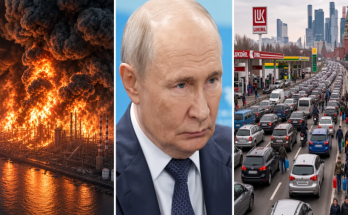
The campaign quickly expanded beyond military facilities. Israeli strikes targeted oil depots, energy infrastructure, and industrial sites in Tehran and across Iran. Major facilities such as the South Pars gas field and Kharg Island energy hubs were attacked, causing fires, environmental concerns, and sharp increases in global oil and gas prices. Independent monitoring groups documented more than 2,300 strikes across most Iranian provinces. Israel also intensified attacks on Iran’s nuclear program, including the Natanz enrichment facility, which Iran considered central to its nuclear development efforts.
Iran responded with missile attacks against Israeli territory, including strikes near Dimona, home to Israel’s nuclear research infrastructure. Although Israeli missile defenses intercepted many projectiles, several missiles and falling debris caused civilian casualties and damage. The deadliest Iranian strike reportedly killed nine civilians in Beit Shemesh, while additional attacks wounded more than 100 people in Dimona and Arad.
The humanitarian impact has been severe. Human rights organizations reported thousands of deaths and injuries within weeks of fighting, including large numbers of civilians. Strikes on schools, hospitals, and residential areas intensified international concern. One reported attack on a girls’ school in Minab allegedly killed more than 170 children, while over a dozen medical facilities suffered damage. Israel disputed accusations of deliberate civilian targeting, insisting its operations focused on military and strategic objectives.
The conflict also spread beyond Iran and Israel. Israel launched heavy operations against Hezbollah infrastructure in southern Lebanon, displacing nearly one million people and causing additional casualties. Regional instability increased further as the Strait of Hormuz faced disruptions, threatening global energy supplies and increasing economic uncertainty worldwide.
International reactions were deeply divided. The United States provided intelligence and strategic support, while the United Kingdom allowed the use of British facilities connected to operations. Meanwhile, the United Nations and several governments condemned the escalation and questioned the legality of the strikes under international law. Countries such as Spain reportedly refused cooperation with aspects of the operation, while global leaders repeatedly called for a ceasefire.
As of late March 2026, the war continued with no clear end in sight. Israel maintained that the campaign was necessary to eliminate a long-standing existential threat, while Iran vowed retaliation and resistance. The conflict has dramatically reshaped Middle Eastern geopolitics, destabilized regional economies, and raised fears of broader escalation involving neighboring states and proxy groups.
Ultimately, the February 28 offensive marked one of the most consequential military confrontations in modern Middle Eastern history. Beyond the immediate destruction and casualties, it altered the strategic balance of the region, intensified global debates over military intervention and nuclear deterrence, and left long-term consequences for diplomacy, energy markets, and regional security that may endure for years.