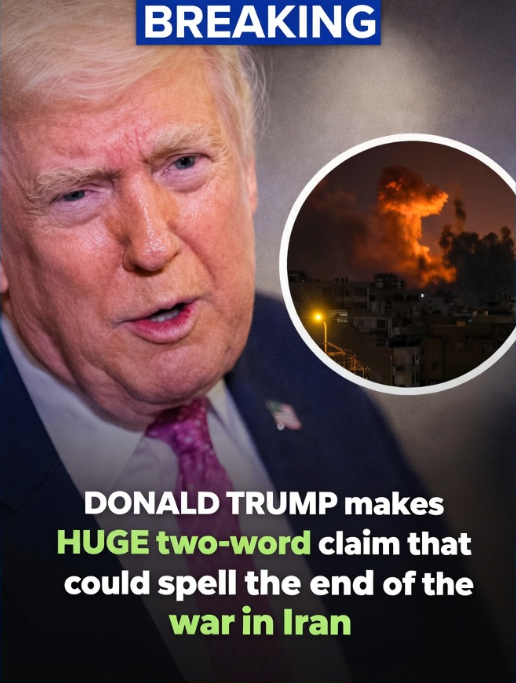
The international reaction to Donald Trump’s declaration that he had achieved “regime change” in Iran, a statement that immediately drew global attention and intensified debate over the ongoing conflict in the Middle East. While the claim suggested a decisive victory and the collapse of Iran’s ruling system, the situation on the ground appeared far more complex and uncertain.
According to the account, the death of Iran’s Supreme Leader, Ayatollah Ali Khamenei, did not produce the expected breakdown of the state. Instead, Iran’s leadership structure quickly reorganized, with his son, Mojtaba Khamenei, reportedly assuming a central leadership role. Key positions within the government, military, and Islamic Revolutionary Guard Corps were filled, allowing the state to continue functioning despite significant disruption. This continuity challenged the notion that the Iranian regime had been completely overthrown.
The conflict itself remained unresolved, with ongoing military, political, and economic consequences affecting both the region and the wider world. Rising energy prices created increasing pressure on the United States, particularly as domestic political concerns and upcoming elections heightened public attention to inflation and fuel costs. At the same time, some Gulf allies that initially supported a hardline approach toward Iran were becoming more cautious, concerned about the risks of a prolonged and destabilizing conflict.
In response to the growing uncertainty, diplomatic initiatives emerged. Countries including Pakistan, Egypt, and Turkey reportedly began supporting mediation efforts aimed at finding a negotiated settlement. These initiatives reflected a growing recognition that military action alone was unlikely to produce a lasting resolution and that diplomacy would be necessary to prevent further escalation.
The situation also generated concern among U.S. allies. Australian Prime Minister Anthony Albanese was described as calling for greater clarity regarding Washington’s long-term objectives. While supporting efforts to prevent Iran from obtaining nuclear weapons, he reportedly warned that externally imposed regime change could create broader regional instability if not accompanied by a realistic political strategy.
The passage portrays Trump’s declaration as highly divisive. Supporters viewed it as evidence of American strength and the beginning of the Iranian regime’s eventual collapse. Critics, however, argued that the claim oversimplified a deeply rooted conflict and risked drawing the United States into a prolonged struggle without a clear exit strategy.
Ultimately, the passage concludes that the future of the conflict will depend less on declarations of victory and more on diplomacy, long-term planning, and efforts to reduce the human and economic costs of continued instability. The region’s future remains uncertain, with lasting peace still far from guaranteed.