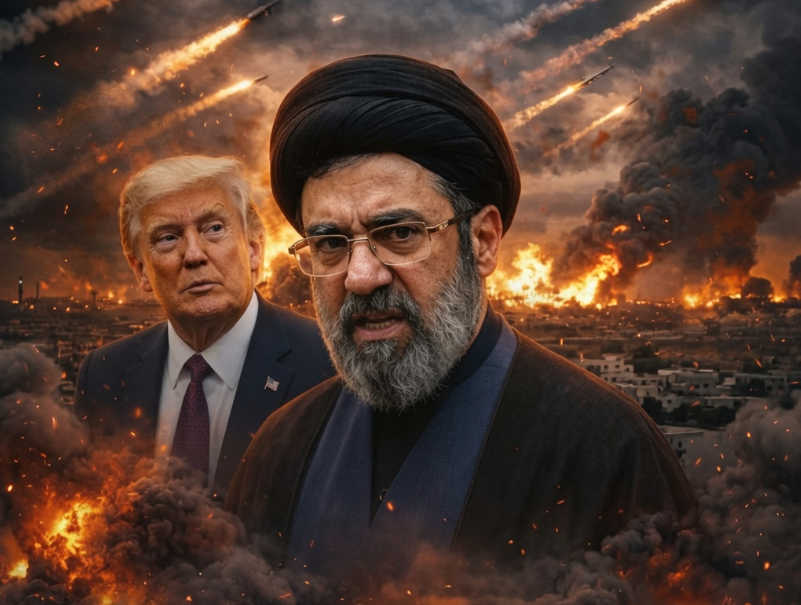
United States and Iran, centered on efforts to negotiate an end to a broader conflict and stabilize key strategic waterways. According to the account, senior U.S. officials—including President Donald Trump, Vice President JD Vance, and Secretary of State Marco Rubio—are engaged in discussions aimed at finalizing a potential agreement with Iran.
A central issue in the negotiations is the status of the Strait of Hormuz, a critical global shipping route. Rubio is quoted emphasizing that the strait must remain open, describing disruptions as unlawful and unsustainable for global commerce. The United States reportedly views reopening and securing the waterway as a non-negotiable element of any agreement.
At the same time, U.S. Central Command is described as carrying out “self-defense strikes” in southern Iran, targeting missile launch sites and naval assets allegedly posing threats to American forces. These operations are said to be part of ongoing military activity intended to protect U.S. personnel, even as cease-fire-related negotiations continue. Locations mentioned include areas near Bandar Abbas, a key Iranian port and naval base.
Despite the military tension, diplomatic talks are reportedly taking place in Qatar, where both U.S. and Iranian representatives are working through detailed language for a possible agreement. Iranian officials have acknowledged progress on some issues but caution that a final deal is not imminent, citing unresolved disagreements and shifting positions in negotiations.
The proposed framework of the deal reportedly includes Iran reducing or eliminating highly enriched uranium stockpiles, restrictions on nuclear enrichment activities, and commitments related to regional security concerns. In return, the United States would consider lifting certain sanctions and easing restrictions tied to the Strait of Hormuz. Officials suggest that many foundational elements of the agreement are already broadly accepted, though technical and enforcement details remain under negotiation.
The report also highlights contrasting narratives: U.S. officials express cautious optimism and emphasize stronger enforcement mechanisms than previous agreements, particularly referencing the 2015 nuclear deal. Iranian representatives, however, stress that while progress has been made, significant gaps remain before any formal agreement can be signed.
Overall, the situation is presented as a delicate balance between active military pressure and ongoing diplomatic engagement. While both sides appear to be moving toward a potential framework for de-escalation, continued strikes, strategic disagreements, and unresolved technical issues mean the outcome remains uncertain. The coming days are portrayed as critical in determining whether negotiations result in a lasting agreement or further escalation.