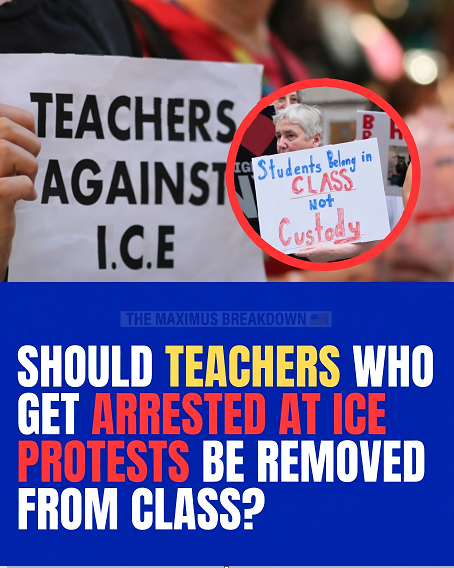
The text argues that teachers who leave their classrooms to protest at ICE facilities—especially when their actions involve blocking law enforcement or disrupting operations—have overstepped their professional responsibilities. It frames such behavior as a clear violation of their role, emphasizing that educators are entrusted with teaching students, not engaging in civil disobedience or political activism that challenges federal authority. By participating in these protests, the text claims, teachers place personal ideology above their duty to students and the expectations of parents and taxpayers.
It further contends that this kind of activism undermines trust in the education system. When teachers are seen supporting individuals who are in violation of immigration laws or opposing border enforcement, the text suggests they compromise their position as role models. The argument is that classrooms should remain focused on core academic subjects and shared civic values, rather than becoming spaces influenced by political agendas or controversial causes.
The text also defends disciplinary action against such teachers, asserting that removal from the classroom is not punitive but necessary to protect students and maintain standards of professionalism. It stresses that allowing educators to return to teaching after being arrested for obstructing law enforcement sends a harmful message—that individuals in positions of authority can break the law without meaningful consequences.
Finally, the text rejects the idea that these measures suppress free speech, instead framing them as essential steps to preserve order and accountability within public institutions. It concludes that educators who engage in illegal protest activities should face consequences similar to other public employees, reinforcing the principle that schools must remain dedicated to education rather than political activism.