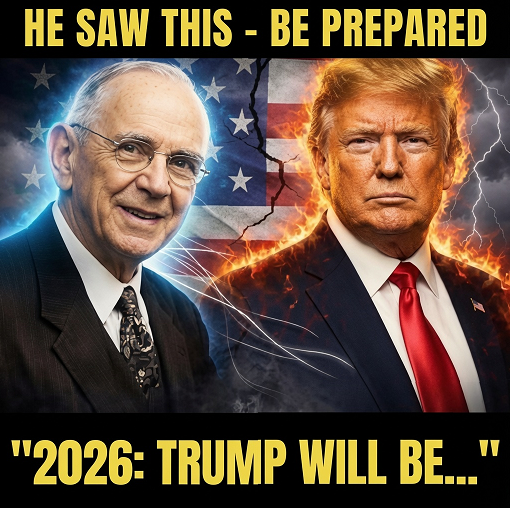
Edgar Cayce’s alleged prediction about Donald Trump and a transformative year in 2026 has attracted renewed attention as political and social tensions continue to shape public debate. Known as the “Sleeping Prophet,” Cayce delivered thousands of readings during the first half of the 20th century, many of which addressed future societal changes, global conflicts, and shifts in political power. Over time, some followers have interpreted portions of his writings as forecasting a period of upheaval in the United States that would culminate in major national transformation.
Supporters of this theory argue that Cayce’s references to institutional distrust, social division, and challenges to leadership resemble modern political developments, particularly those associated with Donald Trump and the deeply polarized political climate of recent years. Online discussions have increasingly focused on 2026 as a potential turning point, suggesting that current events—including political conflicts, legal disputes, economic uncertainty, and declining trust in institutions—reflect conditions Cayce anticipated.
However, there is no evidence that Cayce specifically mentioned Trump or explicitly predicted events occurring in 2026. Most connections are based on modern interpretations of symbolic and often ambiguous readings. Cayce’s forecasts rarely contained precise dates or detailed descriptions of future political figures, making direct comparisons difficult.
Historians and scholars remain skeptical of such claims, noting that broad predictions about social unrest, political conflict, and institutional challenges can apply to many periods throughout history. They also warn that confirmation bias may lead people to focus on events that appear to support a prophecy while ignoring contradictory evidence.
Regardless of whether one views the prediction as prophetic insight or retrospective interpretation, its popularity reflects broader public concerns about political instability, economic pressures, and the future direction of the United States. Ultimately, the claim that Cayce accurately predicted Trump or a decisive turning point in 2026 remains a matter of personal belief rather than documented fact.