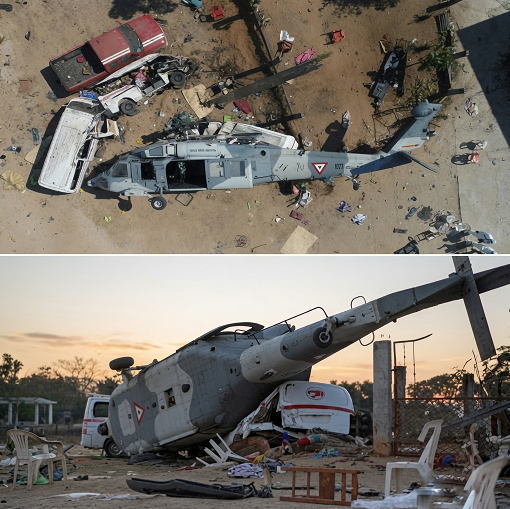
A military helicopter crash in a populated area has resulted in widespread destruction, severe damage, and likely significant human loss, according to the described scene. What was initially expected to be a routine flight ended in a catastrophic accident when the aircraft came down in a residential zone, overturning on impact and crushing multiple vehicles beneath its weight. The wreckage, including an overturned fuselage and scattered debris, illustrates the suddenness and intensity of the crash, which gave little or no warning to those nearby.
Aerial perspectives of the site reveal the full extent of the devastation. The helicopter’s body stretches across the ground, resting on top of destroyed vans and trucks that were parked or moving in the vicinity at the time of the incident. Vehicles such as a red pickup truck and a white van appear completely flattened, emphasizing the force of the impact. Around the crash site, personal belongings and household items are visible, suggesting that civilians were present in the surrounding area when the accident occurred. This proximity to everyday life highlights how aviation disasters in populated zones can rapidly escalate into mass casualty events affecting both direct and indirect victims.
Emergency response efforts in such situations are typically urgent and complex. Firefighters, paramedics, and rescue teams must secure the area, prevent fires fueled by aviation fuel, and search for survivors amid unstable wreckage. The scale of destruction shown indicates that responders would have faced significant challenges, including structural hazards, debris fields, and potential secondary risks such as explosions or fuel leaks. Immediate medical attention for injured individuals and evacuation of nearby residents would have been critical priorities.
Investigators will likely focus on determining the cause of the crash through a detailed examination of multiple factors. These commonly include mechanical failure, pilot error, adverse weather conditions, and operational or maintenance issues. Helicopters rely on complex systems, and failure in components such as rotors, engines, or hydraulics can lead to sudden loss of control. Environmental factors, including wind conditions or low visibility, may also contribute, while human fatigue or misjudgment can further increase risk. A full investigation will be required to establish the exact sequence of events.
Beyond the physical destruction, the human impact of the crash is profound. Such incidents often result in fatalities, serious injuries, and long-term emotional trauma for survivors and families. Communities affected by aviation disasters frequently experience grief, shock, and a lasting sense of vulnerability, particularly when the crash occurs in familiar or residential spaces.
Ultimately, the scene underscores the fragility of life in moments of sudden disaster and highlights the importance of aviation safety standards, rigorous maintenance, and emergency preparedness. It serves as a stark reminder that even highly controlled forms of transport can become sources of tragedy when critical failures occur.