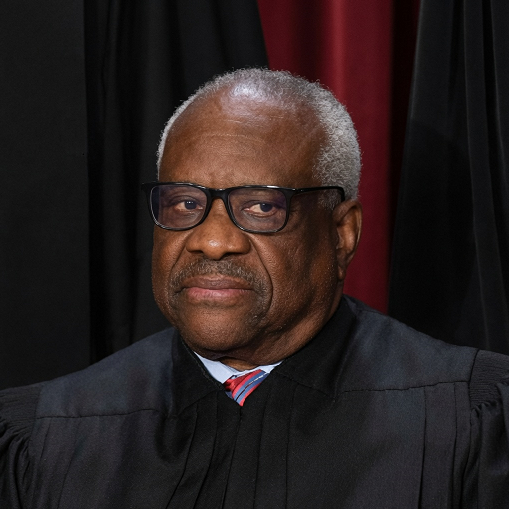
Clarence Thomas regarding the U.S. Supreme Court’s decision to decline hearing a high-profile interstate lawsuit brought by Florida against California and Washington over the issuance of commercial driver’s licenses (CDLs) to undocumented immigrants.
The underlying dispute stems from a 2025 fatal crash on the Florida Turnpike involving a commercial truck driver allegedly licensed in California or Washington. According to the lawsuit described in the report, the driver made an illegal U-turn and failed to properly interpret road signage, resulting in a collision that killed three people. Florida argued that states with more permissive licensing policies were effectively endangering residents in other states by allowing potentially unqualified drivers to operate heavy commercial vehicles across state lines.
The Supreme Court’s majority declined to hear the case without providing a public explanation, effectively leaving Florida without a judicial forum at the federal level to pursue its claims against the other states. This decision prompted a strong rebuke from Justice Clarence Thomas, who, joined by Justice Samuel Alito, argued that the Court has a constitutional obligation to hear disputes between states under its original jurisdiction.
Thomas criticized the majority for what he viewed as an improper refusal to exercise mandatory jurisdiction in interstate conflicts. He emphasized that when one state brings a constitutional complaint against another, the Supreme Court is the only available forum to resolve the dispute. In his view, refusing to hear such cases leaves states without legal recourse and undermines the constitutional framework designed to manage conflicts between sovereign states.
He further argued that the case raised serious public safety concerns tied to federal commercial driver licensing standards. The dissent cited federal regulations requiring CDL applicants to demonstrate adequate driving competency, including understanding road signs and complying with immigration requirements. Thomas suggested that issuing licenses to individuals who cannot meet these standards creates broader risks for highway safety.
The article also notes broader political and policy implications. It references increased federal scrutiny of state CDL practices following a series of fatal crashes involving undocumented immigrant drivers. Transportation Secretary Sean Duffy is described as having pushed for stricter federal enforcement measures and warning states like California about potential consequences, including possible loss of federal transportation funding, if licensing practices are deemed noncompliant.
The broader context includes ongoing national debates over immigration enforcement, state autonomy, and federal oversight. Florida’s lawsuit reflects tensions between states that favor stricter enforcement and those that maintain broader eligibility for licensing. The dispute highlights how policy differences between states can have cross-border consequences, particularly in areas like commercial transportation where drivers routinely operate in multiple jurisdictions.
The article frames the Supreme Court’s refusal as part of a larger judicial debate over how actively the Court should engage with its “original jurisdiction” role in interstate disputes. Thomas argued that avoiding such cases weakens accountability and leaves important constitutional questions unresolved.
Overall, the piece portrays a clash not only over transportation safety and immigration policy, but also over the Supreme Court’s institutional responsibilities. It underscores how a single fatal crash has evolved into a broader legal and political controversy involving state sovereignty, federal standards, and the limits of judicial intervention in interstate conflicts.