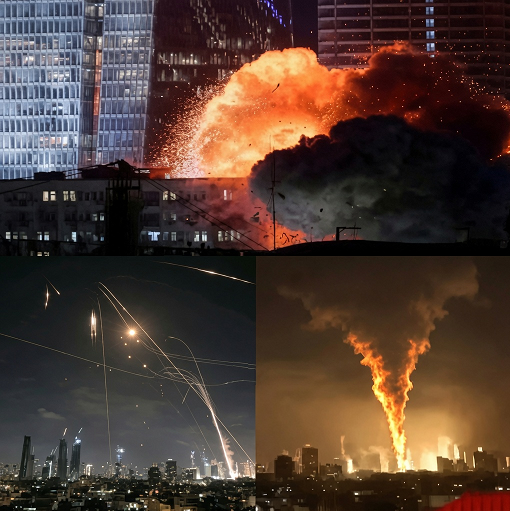
Israel is currently operating under heightened security measures amid renewed regional tensions, prompting increased military readiness, expanded surveillance, and strengthened civil defense protocols. The situation reflects a broader pattern of instability in the Middle East, where historical disputes, security concerns, and geopolitical rivalries often contribute to periodic escalations. While reports continue to develop, officials have emphasized preparedness, public safety, and the importance of relying on verified information rather than speculation.
Authorities have activated various defensive systems and emergency response procedures designed to protect civilians and critical infrastructure. These measures include enhanced intelligence coordination, increased monitoring of potential threats, deployment of air defense capabilities, and heightened readiness among emergency medical and rescue services. Residents have been encouraged to remain calm, follow official guidance, and stay informed through credible sources. Israel’s extensive investment in emergency preparedness over many years has created a framework intended to reduce risks during periods of heightened tension.
The current developments cannot be viewed in isolation. They are part of a larger regional landscape shaped by longstanding political disagreements, territorial disputes, security concerns, ideological differences, economic pressures, and shifting alliances. Analysts note that modern Middle Eastern conflicts often involve both state and non-state actors, making events highly complex and difficult to interpret in their early stages. As a result, experts stress the need for caution before drawing conclusions about responsibility, intentions, or likely outcomes.
Israeli officials have emphasized a dual-track strategy that combines military preparedness with diplomatic engagement. On the security side, authorities are reinforcing defensive measures, protecting infrastructure, and maintaining rapid-response capabilities. At the same time, diplomatic channels remain active, with communication taking place between Israel and international partners. Leaders recognize that while defensive readiness is necessary, long-term stability depends on dialogue, negotiation, and efforts to reduce misunderstandings that could lead to wider conflict.
The implications of heightened tensions extend beyond Israel’s borders. Across the region, governments, businesses, and humanitarian organizations are monitoring developments closely. Economic consequences can emerge quickly, affecting trade routes, tourism, investment, and energy markets. Even limited security incidents can create uncertainty that influences regional economic planning and international investor confidence. Humanitarian concerns are also significant, particularly if instability disrupts daily life or places civilian populations at risk.
The international community has responded by encouraging restraint and supporting diplomatic solutions. Organizations such as the United Nations have historically played important roles in mediation, humanitarian assistance, and conflict monitoring. Regional mediators and international partners frequently seek to facilitate communication, reduce tensions, and create opportunities for de-escalation. Although such efforts can be slow and challenging, they often provide essential foundations for preventing broader conflict.
Media coverage and public communication play a crucial role during periods of uncertainty. Officials and analysts have warned that misinformation can spread rapidly through social media and online platforms, potentially fueling confusion or fear. Responsible reporting requires distinguishing confirmed facts from speculation, providing context, and avoiding sensational claims. Public trust depends heavily on access to accurate information, particularly when security situations evolve quickly.
Beyond government actions, civil society organizations continue working to promote understanding and cooperation. Community groups, educational initiatives, interfaith programs, and dialogue efforts contribute to long-term peacebuilding by encouraging communication across divides. While these grassroots initiatives often receive less attention than military or diplomatic developments, they remain important components of lasting stability.
Many observers believe that sustainable peace remains possible despite recurring tensions. Achieving it would likely require comprehensive negotiations, security guarantees, economic cooperation, confidence-building measures, and ongoing international support. Historical examples from other regions demonstrate that even prolonged conflicts can eventually give way to diplomatic settlements when political leadership and public support align.
Ultimately, the current security situation highlights the complex balance between defense, diplomacy, and humanitarian responsibility. Governments must protect their populations while preserving opportunities for dialogue and peaceful resolution. As events continue to unfold, careful analysis, verified information, and measured responses will remain essential. While challenges persist, continued diplomatic engagement and international cooperation offer the most promising path toward regional stability, reduced tensions, and long-term security for all communities affected by the crisis.