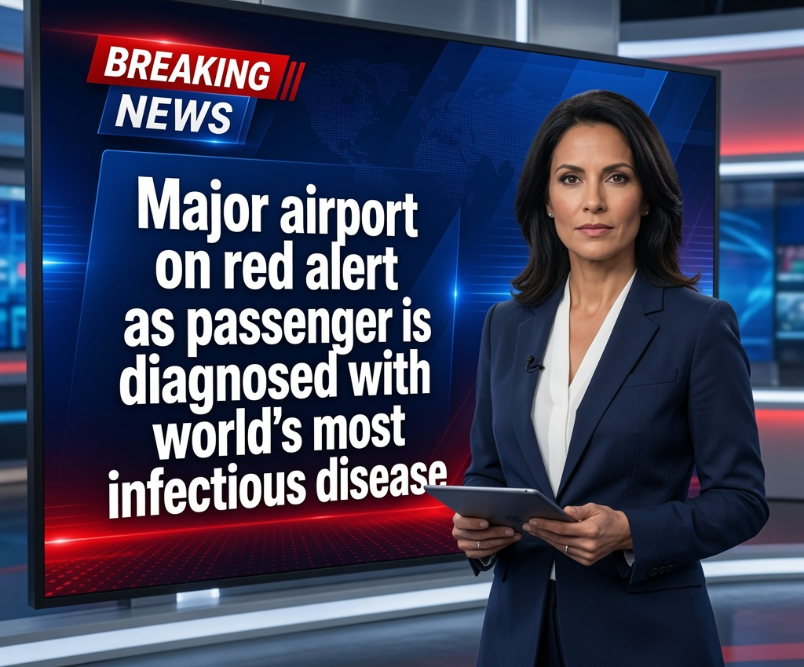
Health officials have issued a public advisory after a confirmed case of Measles was linked to recent travel through O’Hare International Airport. The announcement has prompted increased public health monitoring and renewed attention to vaccination status, although authorities emphasize that the overall risk to the general public remains relatively low.
According to health officials, the infected traveler passed through the airport before later testing positive for measles and is currently recovering in home isolation. Because measles is one of the most contagious viral diseases, public health agencies responded quickly to identify and notify individuals who may have been exposed. The virus spreads through respiratory droplets released when an infected person coughs, sneezes, or breathes. It can also remain suspended in the air for up to two hours in enclosed spaces, making busy transportation hubs such as airports potential locations for exposure.
In response to the confirmed case, health departments, airlines, and airport authorities have begun coordinated contact-tracing efforts. Investigators are working to identify passengers and others who may have been in close proximity to the infected individual during travel. Those who may have been exposed are being provided with information about symptom monitoring, vaccination status, and appropriate medical guidance. Officials are also examining a separate measles case reported in the region to determine whether there is any connection between the two incidents.
Public health authorities, following guidance consistent with the Centers for Disease Control and Prevention and the Illinois Department of Public Health, continue to stress that vaccination remains the most effective defense against measles. The MMR vaccine provides strong protection, with two doses offering high levels of immunity for most individuals and helping prevent outbreaks from spreading.
Officials are reminding the public to be aware of common measles symptoms, which include fever, cough, runny nose, red or watery eyes, and a distinctive rash that typically spreads across the body. Anyone who believes they may have been exposed is advised to monitor for symptoms and contact a healthcare provider before visiting a clinic or hospital, helping reduce the risk of transmitting the virus to others.
While the situation remains under active investigation, health authorities encourage people to stay informed through official updates, confirm that their vaccinations are current, and follow basic hygiene practices when traveling or spending time in crowded public settings.