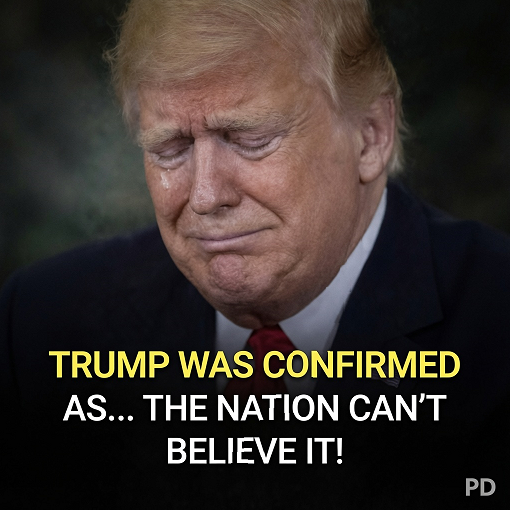
In a quiet, reflective moment in Washington, a former president was observed in a setting far removed from the intensity of political rallies and televised debate. The scene stood out precisely because of its stillness: there were no speeches, no cameras capturing public remarks, and no visible performance of leadership in the usual sense. Instead, the moment was defined by silence and presence.
Within a room typically associated with strategy and decision-making, the absence of political theatre shifted attention toward a more human dimension of leadership. Observers noted that without the usual force of rhetoric or public engagement, the former president appeared in a contemplative state, offering a rare glimpse into the personal weight that accompanies high office.
Those present were not witnessing a public address or a moment designed for media coverage, but rather a pause in the continuous cycle of political activity. In that pause, leadership was perceived less as outward projection and more as internal reflection—an acknowledgment of the complexity and long-term consequences of decisions made while in power.
The atmosphere reportedly carried a subtle tension, shaped by awareness that political leadership involves enduring responsibilities that extend beyond immediate outcomes. Such moments highlight how governance is not only expressed through visible action, but also through private reflection and consideration of past choices.
Outside the room, the broader political environment of Washington continued unchanged, driven by news cycles, debates, and institutional routines. However, for those who witnessed the brief stillness, the contrast underscored how different leadership can appear when stripped of public performance.
Ultimately, the moment served as a reminder that behind political figures often defined by controversy or authority lies a quieter human reality—one shaped by memory, responsibility, and reflection that rarely reaches the public eye.