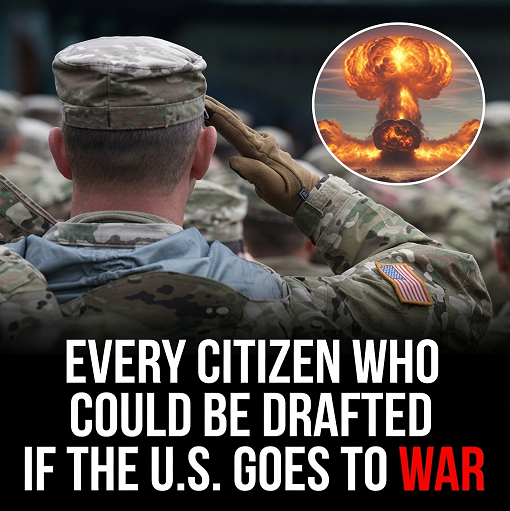
Growing international tensions and ongoing conflicts in several parts of the world have renewed public discussion about the possibility of a U.S. military draft. Although the United States has relied on an all-volunteer military force for more than fifty years, concerns about large-scale wars and expanding security challenges have led some Americans to wonder whether conscription could ever return.
The United States last used the military draft during the Vietnam War era. Since 1973, military personnel have been recruited through voluntary enlistment rather than mandatory service. However, the legal framework for a draft still exists through the nation’s selective service system, which serves as an emergency contingency plan should the government ever determine that additional military personnel are needed beyond what volunteers can provide.
Under current law, most male U.S. citizens and certain immigrants are required to register with the selective service system when they turn 18. Registration itself does not mean someone is being drafted. Instead, it creates a database that could be used if Congress and the president authorized the reinstatement of compulsory military service during a national emergency.
If a draft were ever activated, eligible individuals would not automatically enter military service. Those selected would first undergo medical examinations, background screenings, and other evaluations to determine their fitness for service. Individuals with serious health conditions, disabilities, or other qualifying circumstances could be exempted. Historically, deferments have also been granted to people working in critical industries or occupations considered essential to national interests.
Despite growing public speculation, government officials have repeatedly stated that there are currently no plans to reinstate the draft. The modern U.S. military remains a professional volunteer force, and military leaders generally emphasize the effectiveness of recruiting trained volunteers rather than relying on compulsory service. Defense officials have also noted that advances in technology, specialized training requirements, and modern warfare make today’s military significantly different from the large conscript armies of previous generations.
Nevertheless, renewed geopolitical uncertainty has sparked debate about military readiness and national security. Conflicts involving major powers, regional instability, and concerns about global security have prompted discussions about what measures might be necessary during an extreme national crisis. While some view the selective service system as a prudent safeguard, others question whether a draft would be practical or necessary in the modern era.
For now, the possibility of a U.S. military draft remains hypothetical. The legal mechanisms remain in place as a precautionary measure, but activating them would require significant political decisions and congressional approval. Although public concern tends to increase during periods of international tension, officials continue to stress that there is no active effort to restore mandatory military service. The selective service system exists primarily as an emergency backup plan designed for extraordinary circumstances rather than an indication that a draft is imminent.