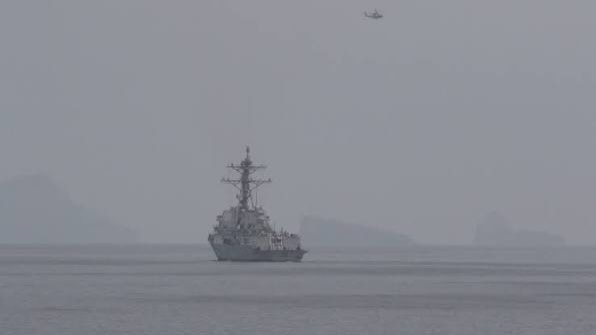
According to The Wall Street Journal, citing a senior U.S. official, the United States has put into effect a blockade targeting maritime traffic linked to Iran, with a particular focus on the strategically vital Strait of Hormuz. The report states that approximately 15 U.S. warships have been deployed and are positioned to enforce restrictions on vessels traveling to and from Iranian ports across the Persian Gulf and the Arabian Sea.
The move represents a significant escalation in U.S. military activity in the region, signaling a shift toward more direct pressure on Iran’s economic and logistical capabilities. By limiting access to key shipping routes, the blockade is intended to constrain Iran’s ability to export goods—particularly energy resources—and to disrupt its broader maritime operations.
The Strait of Hormuz is one of the most critical waterways in the world, with about 20% of global oil consumption passing through it each day. Any disruption in this corridor has immediate consequences for international energy markets, often resulting in increased oil prices and heightened economic uncertainty. As such, the enforcement of a blockade in or around this area carries global implications far beyond the immediate region.
With 15 warships reportedly involved, the United States has established a substantial naval presence capable of monitoring, intercepting, and potentially detaining vessels suspected of violating the blockade. While specific rules of engagement have not been disclosed, such operations typically involve surveillance, identification, and control of maritime traffic.
The development comes amid ongoing tensions and stalled diplomatic efforts between Washington and Tehran. While negotiations have been discussed, the imposition of a blockade suggests that the U.S. is simultaneously pursuing a strategy of military and economic pressure to influence outcomes.
Overall, the reported action highlights the fragile security environment in the Persian Gulf and underscores the high stakes for global trade and energy stability.