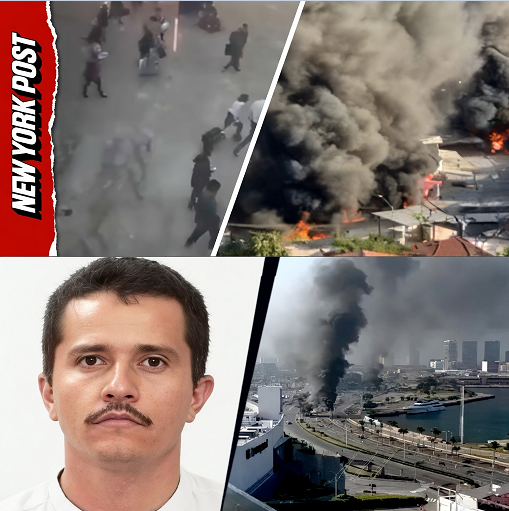
Nemesio Oseguera Cervantes, commonly known as “El Mencho,” is reported to have been killed by the Mexican military. It portrays the event as a major turning point in Mexico’s long-running struggle against organized crime, while emphasizing the immediate unrest that allegedly followed in parts of the country. The claims presented in the article should be viewed cautiously unless confirmed by official authorities and credible news organizations.
According to the account, El Mencho’s death triggered a rapid escalation of violence, particularly in Puerto Vallarta, where tourists were reportedly advised to remain indoors as armed groups retaliated against government forces. The article describes scenes of chaos, including gunfire, security operations, and a large deployment of police and military personnel attempting to restore order. A city known primarily for tourism and recreation is depicted as suddenly becoming the center of a major security crisis.
The article highlights El Mencho’s role as leader of the Jalisco New Generation Cartel (CJNG), one of Mexico’s most powerful criminal organizations. Under his leadership, the cartel allegedly expanded rapidly through a combination of violence, strategic alliances, and control of drug trafficking routes. The CJNG has long been associated with the trafficking of methamphetamine and fentanyl, making El Mencho a major target of both Mexican and U.S. law enforcement agencies.
A central theme of the article is the possibility that El Mencho’s death could create a power vacuum within the cartel. Historically, the removal of major cartel leaders has often led to internal struggles and increased violence as rival factions compete for control. The article suggests that competing criminal organizations may also seek to take advantage of any instability, potentially sparking broader conflicts across regions where the CJNG operates.
The article further explores the implications for public safety and tourism. It notes that violence associated with organized crime can damage the reputation of popular tourist destinations and create economic difficulties for businesses that depend on visitors. Concerns about traveler safety, reduced bookings, and disruptions to local commerce are presented as likely consequences if instability persists.
The Mexican government is portrayed as facing intense pressure to respond effectively. The article discusses ongoing debates over the use of military force against cartels, with supporters arguing that strong action is necessary to combat organized crime and critics warning about potential human rights concerns and unintended consequences.
International implications are also discussed. Because the CJNG has extensive links to drug trafficking networks that reach the United States, the article suggests that cooperation between Mexican and American authorities would become increasingly important. Intelligence sharing, joint investigations, and coordinated enforcement efforts are described as key tools in addressing any fallout from the reported death of the cartel leader.
Ultimately, the article presents El Mencho’s reported death as either a potential turning point in the fight against organized crime or simply another chapter in Mexico’s ongoing struggle with cartel violence. It concludes by arguing that lasting solutions will require addressing deeper issues such as corruption, poverty, and limited economic opportunities, which continue to contribute to the persistence of criminal organizations in Mexico.