Iranian capital, Tehran, may have been subjected to a large-scale aerial attack involving advanced stealth aircraft, including the Lockheed Martin F-35 Lightning II. The report emphasizes throughout that the allegations remain unconfirmed and that neither Iranian authorities nor any military organization has officially verified that such an operation occurred.
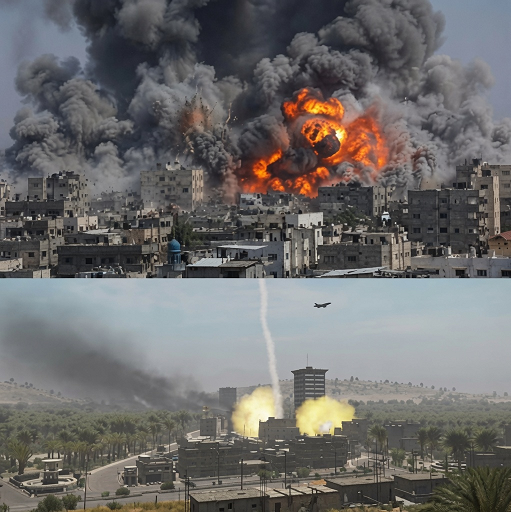
According to the article, reports began circulating across regional monitoring channels, social media platforms, and defense-focused networks claiming that multiple explosions had been heard across different areas of Tehran. Some accounts alleged that residential buildings, infrastructure facilities, and other urban structures suffered significant damage during what was described as a coordinated strike operation. The speed at which these claims spread quickly attracted the attention of security analysts, journalists, governments, and observers around the world.
Early accounts suggested that explosions were reported in multiple districts within a short period. Witness reports referenced possible power outages, emergency response activity, and confusion throughout parts of the city. Some sources claimed that the pattern of impacts resembled precision-guided strikes aimed at specific infrastructure targets, while others described broader and less organized blast effects affecting urban areas. Despite these assertions, the article repeatedly notes that no independently verified damage assessments, official reports, or authenticated satellite imagery had been released to support the claims.
A major focus of the discussion involves the alleged use of stealth aircraft. The F-35 Lightning II is one of the world’s most advanced combat aircraft, designed to conduct precision strike missions while minimizing radar detection. Military analysts cited in the article note that if such aircraft were involved in any operation over Tehran, it would likely indicate a highly sophisticated mission requiring extensive intelligence gathering, target identification, electronic warfare support, mission planning, and coordination. However, experts also stress that there is currently no evidence confirming that F-35 aircraft participated in any attack on Iranian territory.
The article highlights the challenges of verifying information during rapidly developing security incidents. In modern conflict environments, early reports are often incomplete, contradictory, and influenced by misinformation. Communication disruptions, restricted access to affected areas, government censorship, and the rapid spread of social media content can all make it difficult to determine what actually occurred. Defense analysts caution that initial reports frequently change as more reliable information becomes available.
Another significant issue raised in the article concerns Iran’s air defense capabilities. Iran maintains a complex and layered air defense network consisting of radar systems, missile batteries, surveillance infrastructure, and electronic monitoring systems designed to detect and respond to aerial threats. Some unverified reports suggested that these defenses may have been activated during the alleged incident and attempted to intercept incoming aircraft or missiles. However, the article states that no confirmed information has emerged regarding whether Iranian air defense systems were engaged, how they responded, or whether they were successful.
The lack of official statements further contributes to uncertainty. According to the article, authorities in Tehran had not provided detailed public confirmation or denial regarding reports of widespread strikes. Without official acknowledgment, observers are left relying on fragmented reports from unofficial sources, making it difficult to assess the true situation.
The article also examines the conflicting narratives that often emerge during crises. Some online sources portrayed the incident as a major coordinated attack involving multiple waves of strikes across Tehran. Others suggested that reports may have been exaggerated, misinterpreted, or related to isolated explosions unrelated to military action. The absence of verified visual evidence, independent reporting, or official confirmation has prevented analysts from reaching firm conclusions.
International monitoring organizations and intelligence analysts are reportedly paying close attention to the situation. The article states that satellite imagery, radar tracking information, communications intelligence, and other forms of data are being reviewed to determine whether any coordinated military activity actually occurred. Open-source intelligence communities and aviation tracking networks have also been monitoring developments, but no definitive evidence confirming a large-scale strike had emerged at the time of reporting.
The potential geopolitical implications receive considerable attention. The article notes that if a major airstrike against Tehran involving advanced stealth aircraft were eventually confirmed, it could represent a significant escalation in regional tensions. Such an event could trigger diplomatic responses, emergency consultations among governments, military alerts, and potential retaliatory measures depending on who was determined to be responsible.
Analysts also warn that a confirmed attack on Tehran could affect global energy markets, shipping routes, and broader regional security dynamics. The Middle East remains a strategically important region for global energy supplies and international trade, meaning that any major military escalation could have consequences extending well beyond Iran’s borders.
Despite these possibilities, the article repeatedly emphasizes caution. Experts stress that no official confirmation exists regarding the destruction of buildings in Tehran, the involvement of F-35 aircraft, or the occurrence of a coordinated airstrike. The claims remain based on early reports that have not been independently verified through reliable evidence.
In conclusion, the article portrays a highly uncertain and evolving situation characterized by speculation, incomplete information, and intense international scrutiny. Reports of explosions, possible damage, and alleged stealth aircraft involvement have generated widespread concern, but there is currently no verified evidence confirming the claims. Until official statements, satellite imagery, independent investigations, or other credible sources provide confirmation, the reported attack should be regarded as an unverified allegation rather than an established fact. The situation remains under close observation as governments, analysts, and international organizations continue seeking reliable information about what may—or may not—have occurred over Tehran.