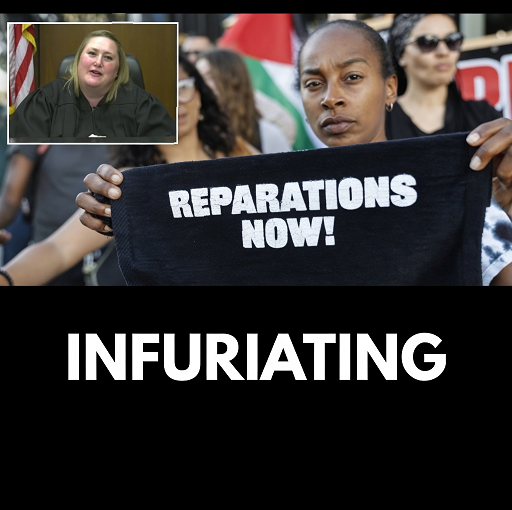
Legal challenge to a reparations fund established by the city of San Francisco and a recent court ruling that allows the program to move forward for now. Joseph Quinn of the San Francisco Superior Court ruled that the lawsuit was premature and sustained a demurrer, meaning the court found that the plaintiffs had not yet presented a legally sufficient case for review.
The lawsuit was filed by the Pacific Legal Foundation, several San Francisco residents, and the Californians for Equal Rights Foundation. The plaintiffs argue that the reparations ordinance could lead to race-based distribution of benefits and therefore violate constitutional protections that prohibit government programs from allocating benefits or burdens based on race. They contend that taxpayer funds should not be used to support programs that discriminate on racial grounds.
During court proceedings, attorneys for the Pacific Legal Foundation argued that the ordinance establishes a publicly administered fund for what they consider an unlawful purpose. Judge Quinn questioned whether the mere possibility that a future program might consider race was enough to justify a legal challenge. He concluded that speculation alone was insufficient and noted that accepting such an argument could open the door to numerous lawsuits challenging laws based on hypothetical future actions.
According to the ruling, the plaintiffs would need to demonstrate that the ordinance is unlawful in every possible application. Quinn indicated that if the program could be implemented in a lawful, non-race-based manner, then the challenge faces significant legal obstacles. However, he granted the plaintiffs leave to amend their complaint, allowing them to revise their arguments or pursue an appeal.
The reparations fund was authorized by an ordinance signed by Daniel Lurie in December. The measure establishes a framework for a reparations fund intended to address historical discrimination experienced by Black residents. Although public discussions have included proposals of payments of up to $5 million for eligible recipients, the ordinance itself does not appropriate money, guarantee payments, or establish a funding source. Instead, the fund may receive contributions from private donors, foundations, and other non-city sources, while any future use of taxpayer money would require separate legislative approval and funding authorization.
Overall, the ruling does not determine whether reparations payments would be constitutional. Instead, it concludes that the challenge was brought too early and that more specific evidence would be needed before the courts can fully evaluate the legality of any future reparations program.