Five oil tankers that had been waiting outside Iran’s easternmost port in the Gulf of Oman reportedly disappeared from satellite imagery shortly before a U.S. naval blockade took effect, according to reporting cited by a U.S. official speaking to the Washington Post. The vessels had been loitering in the region amid rising tensions surrounding maritime restrictions near Iran.
In the hours leading up to the enforcement of the blockade ordered by U.S. President Donald Trump, the ships dispersed from their positions near the Gulf of Oman. Since then, their movements have varied. One tanker has reportedly returned to an Iranian port, suggesting a reversal of course after initially departing the area. Two additional vessels turned back independently, while the remaining two continued moving but are now being closely monitored.
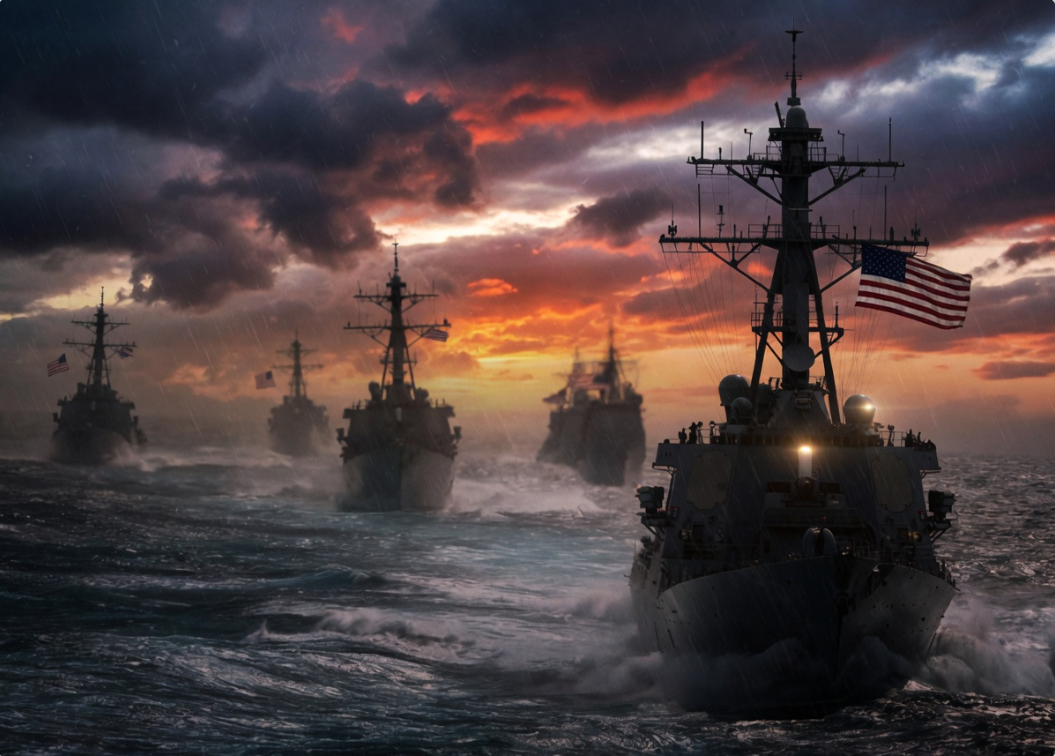
Those two tankers are being shadowed by U.S. Navy Arleigh Burke-class guided-missile destroyers operating in the Arabian Sea. These warships are part of ongoing U.S. maritime operations intended to enforce restrictions on Iranian-linked shipping and maintain pressure on maritime traffic associated with Iranian ports.
The developments occur amid heightened tensions in the region, where naval activity has increased due to disputes over shipping access and sanctions enforcement. The Strait of Hormuz and surrounding waters remain strategically important due to their role in global energy transport, making any disruption in vessel movement significant for international markets.
The situation reflects a rapidly shifting maritime environment in which commercial shipping routes are being influenced by military positioning and geopolitical conflict. The tracking of vessels by naval forces underscores the heightened enforcement posture in the region, while the movement of the tankers suggests uncertainty among commercial operators navigating the evolving restrictions.
Overall, the incident highlights the intersection of military operations, international shipping, and geopolitical tensions affecting one of the world’s most critical energy transit corridors.