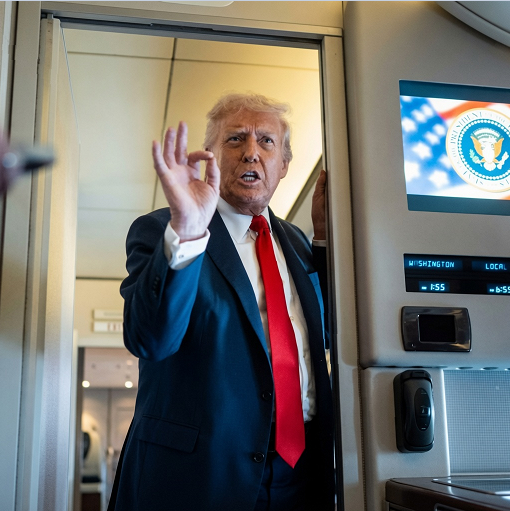
President Donald Trump reportedly spoke with Fox News correspondent Trey Yingst shortly before the United States launched a new series of military strikes against targets in Iran. According to Yingst, Trump called him from the Situation Room and discussed the military operation that was about to take place, offering insight into the administration’s thinking before the attacks began.
Trump later posted on Truth Social that Iran’s military capabilities had been severely weakened. He claimed that much of Iran’s air force, navy, and other military assets had been destroyed or rendered ineffective. The president argued that Iranian leaders had failed to reach an agreement during negotiations and warned that they would face consequences for delaying talks.
U.S. Central Command announced that additional self-defense strikes began at approximately 5:15 p.m. Eastern Time. Military officials stated that the attacks targeted several locations inside Iran and were carried out in response to what they described as continued Iranian aggression. The strikes were authorized by the commander in chief and aimed at reducing threats to American forces and regional security.
According to Yingst, Trump later said that the bombing campaign would end shortly after discussions with senior Iranian officials who reportedly requested a halt to the military operations. Trump allegedly stated that 49 Tomahawk missiles were launched during the strikes and that some targets were located near Tehran. He also reportedly said that American aircraft were operating over Iranian territory to eliminate radar systems and air defense positions.
When asked what would happen if Iran rejected a proposed agreement, Yingst said Trump responded that additional bombing could follow. Trump also reportedly stated that U.S. forces had struck Iran hard during the operation.
Approximately two hours after the conversation, Central Command announced that the mission had been completed successfully. Military officials said the strikes involved Marine Corps, Air Force, and Navy assets using precision-guided weapons against surveillance systems, communications facilities, and air defense sites believed to threaten American personnel and international shipping routes.
Defense Secretary Pete Hegseth defended the administration’s approach, arguing that diplomacy and military pressure can work together. He stated that negotiations remain possible but emphasized that military force would be used if necessary. Hegseth said the strikes were intended to improve America’s position in future negotiations while achieving military objectives.
Senator John Kennedy expressed skepticism that Iran would agree to a deal and warned that further military action might not eliminate Iran’s capabilities. He argued that any decision to send American ground troops would require discussions with Congress and additional intelligence briefings.
The latest operations highlight growing tensions between Washington and Tehran. The administration maintains that economic pressure, diplomacy, and military action are all part of a strategy aimed at securing an agreement favorable to U.S. interests while protecting American forces and regional stability.