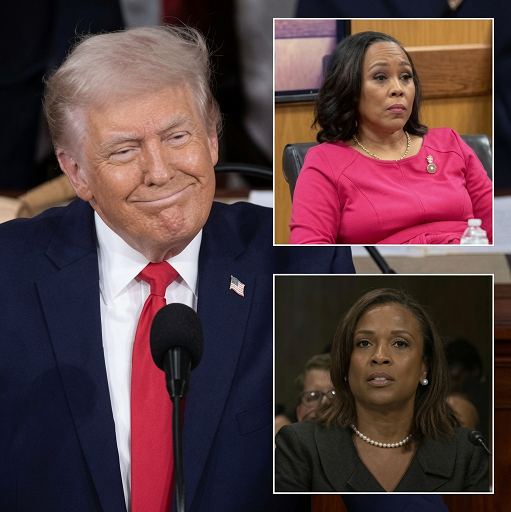
A federal judge in Georgia, Judge Eleanor Ross, has recused herself from a prominent election-related case after the Justice Department under the Trump administration requested her removal.
Ross announced her decision in a brief court order, stating only that stepping aside was appropriate “in the interest of justice.” The case will now be reassigned through the Northern District of Georgia’s standard random selection process.
The Justice Department argued that Ross could not fairly oversee the case because her impartiality might reasonably be questioned. Federal prosecutors pointed to her previous professional associations and her attendance at a political event connected to Fulton County District Attorney Fani Willis. According to the government, these circumstances created at least the appearance of bias, which is sufficient grounds for recusal under federal law.
The request relied on 28 U.S.C. § 455, which requires federal judges to step aside when their impartiality could reasonably be questioned. Because Ross voluntarily recused herself, the court never ruled on whether the government’s concerns legally required her removal. As a result, no official determination was made regarding the merits of the Justice Department’s arguments.
The recusal occurred amid separate scrutiny involving a judicial misconduct investigation. Earlier findings concluded that Ross had engaged in an inappropriate relationship with a police officer inside her chambers. Investigators also determined that she attended a political celebration connected to Fani Willis. During the investigation, Ross initially denied some allegations before later acknowledging the relationship. She ultimately received a private reprimand.
The misconduct inquiry reportedly began after a law clerk raised concerns regarding the judge’s conduct. The investigation brought renewed attention to her participation in political events associated with figures involved in highly publicized election-related prosecutions.
The underlying lawsuit concerns disputes involving Georgia election procedures and voter records. Defendants in the case deny any wrongdoing and continue to challenge the legal basis of the claims.
Supporters of the Trump administration viewed Ross’s recusal as a victory, arguing that judges handling politically sensitive election cases must avoid even the appearance of bias. Administration officials stated that election disputes should be heard by judges who remain impartial and avoid political involvement.
Critics, however, accused the Justice Department of attempting to remove judges perceived as unfavorable to its position. Defense attorneys opposed the effort to disqualify Ross, arguing that replacing the judge would delay proceedings and place additional burdens on the defendants. One defense attorney expressed concern that ethics rules could be used strategically to influence case assignments.
The reassignment is expected to slow the litigation because the incoming judge must review thousands of pages of documents, evidence, and unresolved motions. Legal experts note that federal recusal standards focus on public confidence in the judiciary rather than proof of actual bias.
A new judge is expected to be selected soon. Once reassigned, the court will likely hold a status conference to establish a revised schedule and determine whether any prior rulings require reconsideration before the case proceeds.