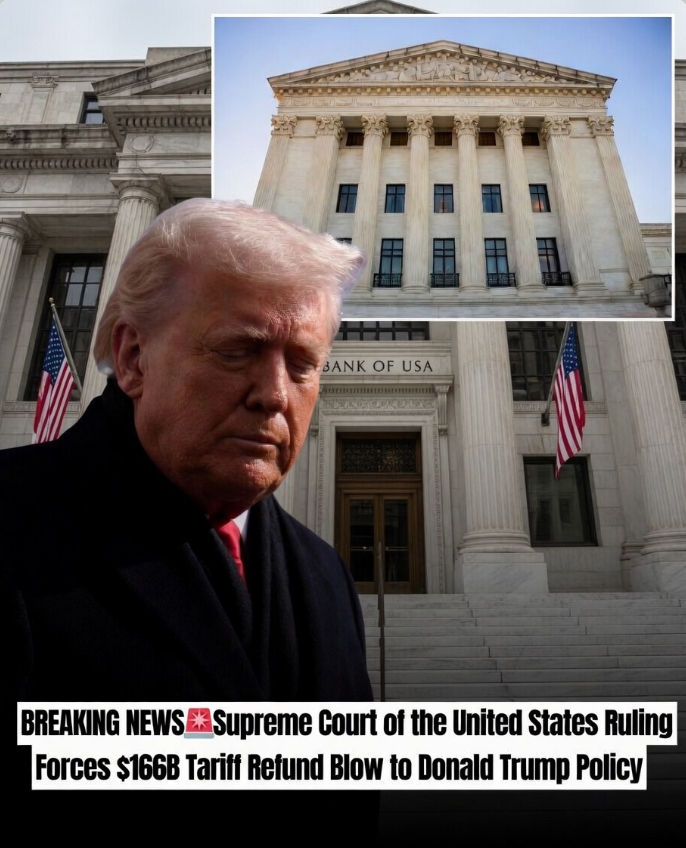
A major setback has emerged for former President Donald Trump’s tariff policy following a landmark decision by the Supreme Court of the United States. The Court ruled that the administration lacked the legal authority to impose certain tariffs earlier in the year, triggering a sweeping reversal with significant financial consequences.
As a result of the ruling, approximately $166 billion in tariff-related funds are now being made available for refunds to affected businesses. These companies, many of which had paid substantial import duties under the policy, can begin filing claims immediately through a newly established federal system designed to handle the reimbursement process.
Officials have cautioned that the scale of the refunds is unprecedented, both in terms of the total amount involved and the expected volume of claims. Because of this, the claims process may quickly become complex and potentially slow-moving. Businesses are expected to face administrative hurdles as agencies work to verify claims, ensure compliance, and distribute funds accurately.
The rollout of the refund system marks a significant logistical challenge for federal authorities. Agencies must manage a surge of applications while maintaining transparency and preventing errors or fraudulent claims. At the same time, businesses are being urged to act promptly but carefully, ensuring that all required documentation is complete to avoid delays.
This development represents not only a financial shift but also a legal and political blow to the tariff strategy. The ruling underscores limits on executive authority in trade policy and could have lasting implications for how future administrations approach tariffs. For now, the focus remains on implementing the refund process efficiently and addressing the concerns of businesses seeking to recover their funds.