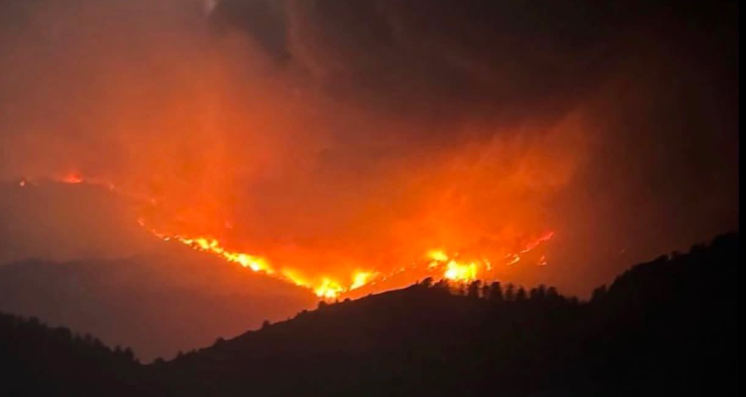
The Babylon Fire in San Juan County, Utah, has grown to more than 100,000 acres, making it the largest active wildfire in the United States.
Fire officials report that the blaze remains 0% contained, underscoring the enormous challenge facing firefighters as they battle rapidly changing conditions. Since igniting, the wildfire has already destroyed five structures and continues to threaten additional homes, infrastructure, and valuable natural resources across southeastern Utah.
According to incident commanders, the fire is expected to remain highly active due to a combination of extreme weather and dry fuel conditions. Forecasts call for hot temperatures, critically low humidity, and wind gusts reaching up to 25 miles per hour. These conditions are expected to fuel rapid fire growth, particularly along the eastern and northeastern flanks of the fire, where crews anticipate the greatest potential for expansion.
Firefighters are deploying a wide range of resources to slow the fire’s advance.
Heavy equipment is being used to construct fire lines, while hand crews continue clearing vegetation and strengthening containment barriers in difficult terrain. Natural features such as rocky landscapes and existing clearings are also being incorporated into firefighting strategies to help limit the fire’s spread. Protecting communities near Monticello remains a top priority, with crews focusing on defending homes, critical infrastructure, and other vulnerable areas.
The wildfire has also prompted widespread closures across public lands in southeastern Utah. Officials have closed portions of the Manti-La Sal National Forest, sections of the Needles District within Canyonlands National Park, and nearby Bureau of Land Management lands to protect public safety and allow emergency personnel to operate effectively. Residents and visitors are urged to respect all closure orders and avoid entering affected areas while firefighting operations continue.
Despite the challenging outlook, officials say there has been one encouraging development.
Portions of southeastern Utah have received much-needed rainfall over the past several days. Although the precipitation has not been sufficient to significantly slow the Babylon Fire or eliminate the region’s elevated fire danger, it has added some moisture to the landscape. Fire managers say this may temporarily reduce fire activity in localized areas and provide firefighters with brief opportunities to strengthen containment efforts.
Authorities continue to monitor the fire closely and warn that weather conditions could change rapidly. Residents in and around affected communities are encouraged to remain alert, follow evacuation notices if issued, and stay informed through official wildfire updates as firefighters work around the clock to bring the massive blaze under control.