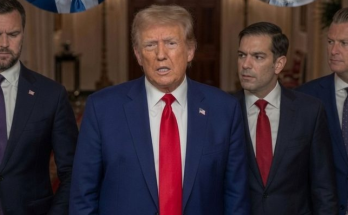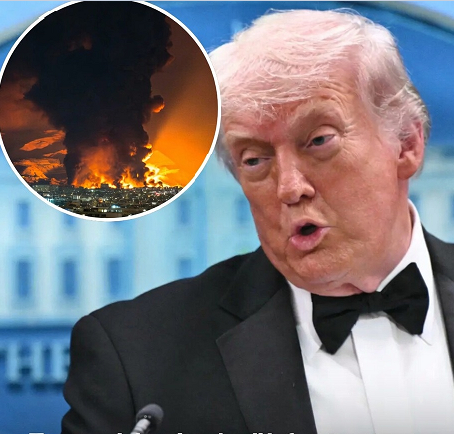
Iran’s oil infrastructure is at risk due to mounting pressure from a U.S. naval blockade, which has sharply limited the country’s ability to export crude. Former U.S. President Donald Trump stated in a televised interview that Iran could face catastrophic consequences within days, suggesting that its oil systems might “explode” because excess crude cannot be transported or stored. He argued that blocked export routes have left Iran without sufficient shipping capacity, forcing oil to accumulate within pipelines and facilities, potentially leading to mechanical failure.
Underlying these claims is a more widely supported concern: Iran is rapidly running out of storage space. With exports constrained, Tehran has redirected oil into onshore storage tanks, which have limited capacity. Analysts warn that once these tanks are filled, Iran may be forced to halt production at its oil fields. According to assessments from the American Enterprise Institute’s Critical Threats Project and the energy consulting firm Energy Aspects, this threshold could be reached within days or weeks.
Shutting down oil production poses significant risks. Oil reservoirs rely on consistent pressure and flow, and abrupt or prolonged stoppages can damage the fields, reducing their long-term productivity. Restarting operations after a shutdown is often technically challenging and may result in lower output levels than before. For Iran, which produces roughly 2 million barrels per day, such disruptions could further strain an already fragile economy.
Experts emphasize that while production shutdowns are a credible risk, the idea of pipelines or underground systems suddenly exploding due to excess oil buildup is far less plausible. Modern oil infrastructure is typically equipped with pressure regulation systems and safety mechanisms designed to prevent such catastrophic failures. Instead, Iran is more likely to respond by scaling back production or using temporary storage solutions, such as keeping oil in tankers near its ports, to delay shutdowns.
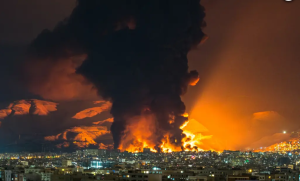
The potential consequences extend beyond Iran. A reduction in its oil output could tighten global supply, particularly in a market already affected by geopolitical tensions and reduced production elsewhere. This could contribute to rising fuel prices worldwide. Overall, while the situation presents serious economic and operational challenges for Iran, the most immediate threat is production disruption—not the dramatic infrastructure collapse suggested in political rhetoric.