As artificial intelligence becomes more integrated into daily life, the United States will need an increasing number of AI data centers to power the systems.
But there’s a problem with that: The data centers require an enormous amount of electricity—and water—to power and cool.
That has led to a growing opposition movement against the centers, as local communities and even entire states move to block their construction to prevent the centers from driving up utility costs for consumers.
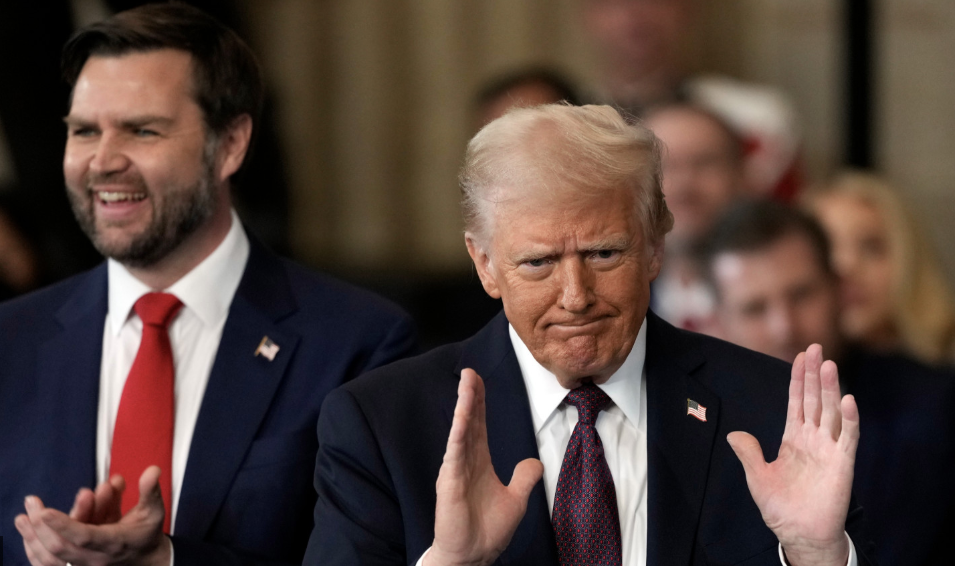
On Thursday, President Donald Trump and his administration introduced a plan to keep AI centers from raising local utility rates while also emphasizing the need to keep building the centers to keep the U.S. atop the AI development race against countries like China.
Trump announced an expansion of his administration’s Ratepayer Protection Pledge, declaring that artificial intelligence companies and other major technology firms will be responsible for funding the power infrastructure needed to support new data centers rather than passing those costs on to American consumers.
Speaking at the Environmental Protection Agency (EPA), Trump said the administration is “insisting that AI data centers and big tech companies pay their own way” as electricity demand continues to rise alongside the rapid expansion of the AI industry, reports said.
Before Trump made his remarks, White House Press Secretary Karoline Leavitt said the president is expanding the pledge to ensure “the American people are never left footing the bill so private companies can benefit.”
Trump said artificial intelligence companies will be required to build and finance the power plants and other energy infrastructure needed to operate their data centers, arguing that the policy will strengthen the nation’s electric grid while shielding American households from higher utility bills.
“They’re going to be building your own electric plants,” Trump said. “You’re essentially becoming a utility.”
Trump added that eventually, “the rates are going to go down” as more AI companies’ power plants come online and can feed back into the overall electric grid.
WATCH:
The White House said more than 220 utilities, technology companies, state governments, and other partners have now signed the voluntary Ratepayer Protection Pledge, representing electricity providers that serve approximately 80% of U.S. households and businesses.
The pledge was first introduced in March, when major technology companies—including Amazon, Google, Microsoft, Meta, OpenAI, Oracle, and xAI—committed to funding the new power generation and grid upgrades needed to support their artificial intelligence data centers instead of passing those costs on to residential ratepayers.
“American AI leadership should never come at the cost of hardworking Americans’ ability to pay their electricity bills,” White House Office of Science and Technology Policy Director Michael Kratsios said at the time.
He went on to say that the pledge is aimed at strengthening the power grid while also protecting consumers.
The announcement comes as electricity demand is expected to climb sharply due to the rapid expansion of AI infrastructure.
A recent analysis by consulting firm ICF estimated that monthly utility bills could increase by 15% to 40% by 2030 if the costs of supplying power to new data centers are passed on to consumers.
During his remarks, Trump argued that the companies requiring the additional power should be the ones building additional resources.
“The cost of building the new infrastructure required to meet this demand should be borne by the corporations themselves, not by the American consumers,” Trump said.
AI systems require thousands of specialized computer chips running around the clock, making data centers among the most energy-intensive facilities in the economy.
Consumer advocates argue that residential customers should not bear the costs of infrastructure built primarily for large technology companies.
Data centers can also consume substantial amounts of water for cooling, raising concerns in drought-prone areas.
Supporters argue that AI data centers create jobs, attract investment, strengthen U.S. technological leadership, and encourage modernization of the electric grid.