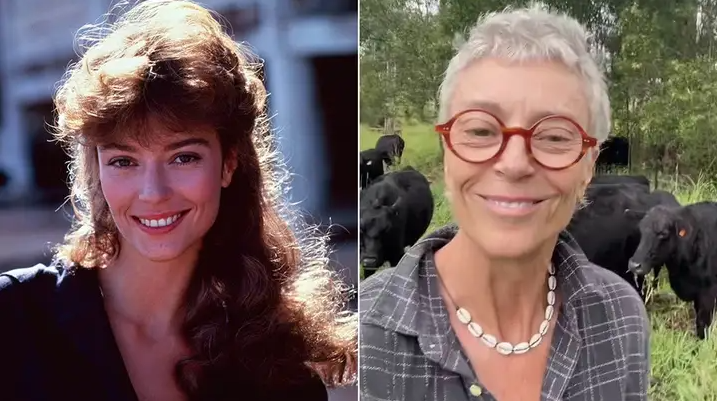
Rachel Ward, the British actress best known for her starring role in the 1983 television miniseries The Thorn Birds, has reflected on why she walked away from Hollywood to embrace a quieter and more meaningful life as a regenerative farmer in Australia. Speaking on the Australian Broadcasting Corporation’s documentary series Australian Story, Ward described Hollywood as an empty and superficial environment that left her feeling disconnected from her true identity.
Born into an aristocratic British family, Ward first found success as an international fashion model before moving to Los Angeles in the early 1980s to pursue acting. Although she quickly gained recognition, including a Golden Globe nomination for her performance in Sharky’s Machine, she said the entertainment industry increasingly valued actresses for their appearance and sexuality rather than their talent. Ward explained that she had admired actresses like Julie Christie, whose performances emphasized romance and character, but found Hollywood had become more focused on glamour and physical attractiveness.
Her breakthrough came with The Thorn Birds, one of television’s biggest successes of the decade. During production, she met Australian actor Bryan Brown, who portrayed her on-screen husband. The pair fell in love, married in 1983, and eventually settled permanently in Australia, purchasing an 865-acre farm in New South Wales in 1986.
Originally, Ward expected to divide her time between Australia and the United States while continuing her acting career. However, after she and Brown welcomed three children—Rosie, Matilda, and Joe—the family’s priorities changed. She decided Australia would become their permanent home, though she continued acting and later expanded into directing, making her directorial debut with the 2009 film Beautiful Kate.
Ward revealed that despite her professional accomplishments, she struggled with periods of depression throughout her life. Living far from Britain left her homesick, and she often questioned her purpose when acting opportunities became less frequent. She admitted feeling disappointed that her filmmaking career had not developed as she had hoped, leaving her uncertain about her future.
A major turning point came during Australia’s devastating Black Summer bushfires of 2019–2020. Although her farm survived with relatively little damage, witnessing the destruction deeply affected her emotionally. Concern over climate change and feelings of helplessness contributed to another period of depression. She later experienced a serious personal crisis after abruptly stopping her antidepressant medication, eventually being hospitalized following a car accident.
Rather than giving up, Ward chose to reinvent herself. Together with Bryan Brown, she transformed their property from conventional agriculture to regenerative farming, focusing on restoring soil health, improving biodiversity, and adopting more sustainable farming practices. She described learning these new methods as exciting and said the bushfires convinced her that traditional farming approaches needed to change.
The transition gave Ward renewed purpose and passion. In 2023, she documented her journey in the film Rachel’s Farm, which explores regenerative agriculture and environmental restoration. Brown praised her hands-on commitment to managing the farm, while their daughter Matilda said farming had completely transformed her mother’s outlook on life, giving her confidence, independence, and happiness.
Ward has also become outspoken about aging naturally. After sharing a makeup-free video of herself with gray hair on social media, she received criticism from some online commenters who said they barely recognized her. Rather than being upset, Ward used the experience to challenge unrealistic beauty standards for older women. She questioned why society expects women to hide wrinkles, dye their hair, or undergo cosmetic procedures simply to appear younger.
Today, Ward says she no longer worries about maintaining a glamorous image or meeting Hollywood’s expectations. Instead, she finds fulfillment in caring for her land, raising cattle, and promoting sustainable agriculture. Looking back, she believes leaving Hollywood allowed her to discover a more authentic and meaningful life—one defined not by fame or appearance, but by purpose, environmental stewardship, and personal happiness.