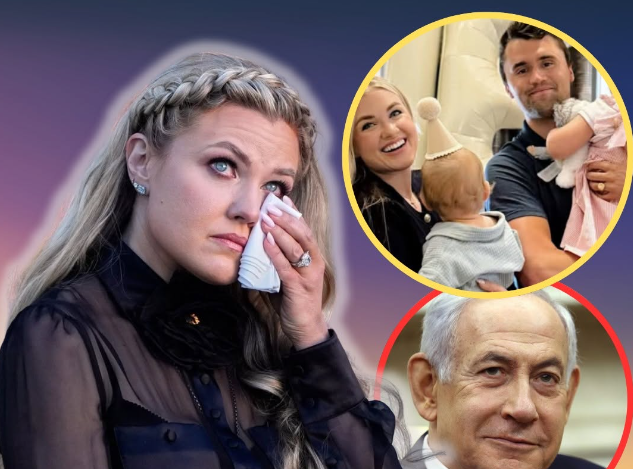
Erika Kirk has spoken publicly about the devastating assassination of her husband, describing the loss as a profound personal tragedy that has deeply affected her life. In interviews and social media statements, she has also expressed distress over what she sees as growing hostility toward Israel following the attack. Her comments have generated significant discussion online, with supporters and critics debating the emotional meaning and political implications of connecting her personal grief to broader international issues.
For Kirk, the loss is first and foremost deeply personal. The sudden and violent death of her husband ended their life together and created an experience of grief that extends beyond ordinary mourning. At the same time, she has chosen to speak about the wider political environment surrounding the tragedy. She believes that increasing hostility toward Israel is another painful development, particularly because she views it as conflicting with the values and causes associated with her husband’s memory.
Supporters of Kirk’s position argue that her comments reflect an understandable connection between personal loss and broader beliefs. They say that when an individual’s life and public identity are connected to important political or national causes, grieving may naturally involve defending those values. From this perspective, her statement represents both mourning and an attempt to preserve what she believes her husband stood for.
Critics take a different view. They argue that personal tragedy should remain focused on the individual who was lost rather than being linked to complicated geopolitical disputes. Some believe that bringing Israel into the discussion risks politicizing grief and reducing complicated international questions to a single emotional narrative. They contend that sympathy for a grieving family should not automatically require agreement with its political perspectives.
The controversy highlights the increasingly difficult relationship between personal tragedy and international politics. When violence occurs within an atmosphere of conflict, political motives, national identities, and public interpretations can quickly become intertwined. As a result, private grief can become part of a much larger public debate.
Israel remains one of the most politically and emotionally sensitive subjects in global affairs. Supporters often view the country as an essential homeland, refuge, and symbol of resilience, while critics focus on territorial disputes, military actions, humanitarian concerns, and the broader Israeli-Palestinian conflict. These sharply different perspectives can make public statements about Israel especially contentious.
Kirk’s remarks demonstrate how quickly individual suffering can become connected to collective political narratives. Her grief has resonated with people who share her views while also provoking criticism from those who believe political questions should remain separate from mourning.
Ultimately, the debate illustrates the complicated ways grief, identity, politics, and public opinion can intersect. Kirk’s statements have encouraged a broader conversation about how individuals respond when personal tragedy occurs against the backdrop of international conflict. They also demonstrate the challenges of maintaining empathy and respectful dialogue when deeply emotional experiences become part of divisive political debates.