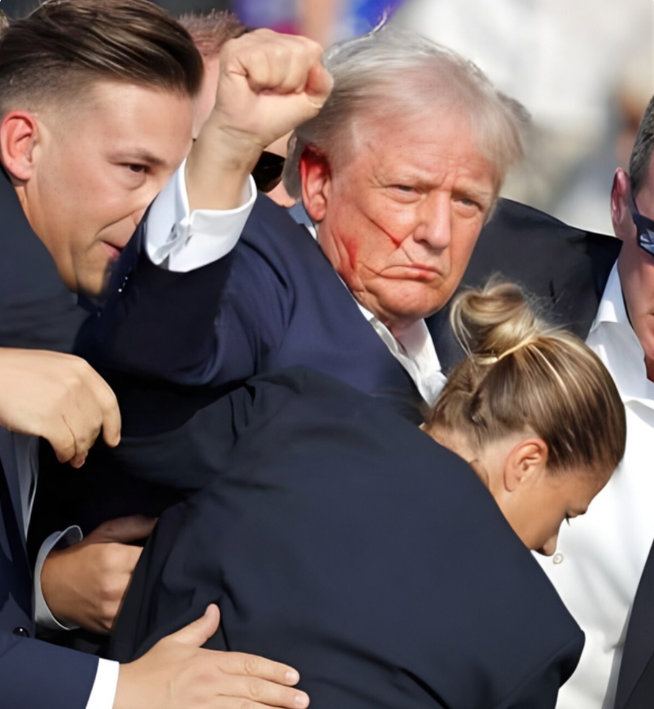
Discourse following an alleged assassination attempt involving Donald Trump, focusing on the rapid spread of conspiracy theories, debates over security failures, and broader concerns about trust in institutions.
It reports that social media users circulated claims referencing an unverified Fox Business poll that allegedly showed widespread skepticism about the official explanation of the incident, including assertions that around 70% of respondents believed it was staged. However, the text stresses that this figure has not been independently confirmed, and its accuracy remains unclear.
According to the passage, conspiracy theories emerged quickly after the incident and spread across different political communities, including both left-leaning and right-leaning online spaces. This widespread dissemination is presented as part of a broader trend in which major political events become focal points for misinformation and competing narratives before official details are fully established.
Federal investigators, including the Federal Bureau of Investigation, are cited as stating that there is no verified evidence supporting claims that the incident was staged or coordinated. Authorities continue to treat the event as an active security investigation, while reaffirming that no substantiated proof supports conspiracy-based interpretations.
The text situates the controversy within a wider context of political polarization and declining institutional trust in the United States. Experts suggest that increased skepticism toward government and media institutions contributes to the public’s willingness to question official accounts of high-profile events. The article also notes that similar doubt has historically followed major political assassinations and crises, sometimes persisting for decades.
In addition, the passage highlights the role of social media in amplifying unverified claims and accelerating the spread of misinformation. It suggests that emotionally charged incidents involving prominent political figures tend to intensify these dynamics, making it difficult for verified information to dominate early narratives.
Sources referenced include reporting from Reuters, Associated Press, and Wired, as well as historical polling data from the Washington Post.
Overall, the text portrays a situation where official investigative findings reject staged-event theories, while public debate and online speculation continue to grow amid broader concerns about trust, transparency, and political division.