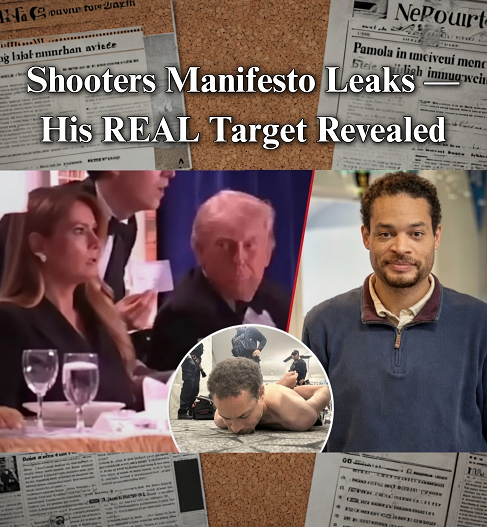
Alleged manifesto reportedly sent by Cole Allen shortly before a violent incident connected to the White House Correspondents’ Dinner in Washington, D.C.. According to sources cited in the report, the document was allegedly sent to family members about ten minutes before the attack and is said to contain both an apology and a justification for the planned violence.
The manifesto, which is described as over 1,000 words long, allegedly begins with Allen apologizing to his family, colleagues, and innocent bystanders who may have been placed at risk. He references deceiving others about his movements and acknowledges that his actions would cause harm. The tone initially presented is remorseful, with apologies extended even to people indirectly affected, such as hotel workers, travelers, and individuals present at the scene.
However, the document then shifts into justification for the planned attack. Allen allegedly states that he believes he has a duty as a citizen of the United States to act against government officials. He frames his actions as a response to perceived wrongdoing by political leadership, using highly inflammatory language to describe senior officials. The text attributes to him claims that he felt compelled to act due to anger and moral opposition to the administration.
The manifesto also reportedly outlines “rules of engagement,” describing categories of individuals and how they were to be treated. According to the text, administration officials were designated as primary targets, while security personnel such as the Secret Service and Capitol Police were to be engaged only if necessary, with a preference for non-lethal force where possible. Hotel staff and guests were described as non-targets, though Allen allegedly states he would still pursue objectives if required. The document also mentions an intention to reduce collateral damage by selecting certain types of ammunition.
A significant portion of the manifesto is presented as a rebuttal to anticipated moral or religious objections. Allen allegedly argues against the idea of “turning the other cheek,” claiming that in his view such teachings do not apply when others are being harmed. He frames this reasoning as a justification for action rather than passivity.
The text concludes with expressions of anger toward the political system, stating that he felt compelled to act based on his perception of injustice. It portrays the document as both ideological and operational, combining emotional expression with detailed descriptions of intent. The overall narrative presents the manifesto as evidence of premeditation, motivation, and target selection in connection with the reported attack at the event.