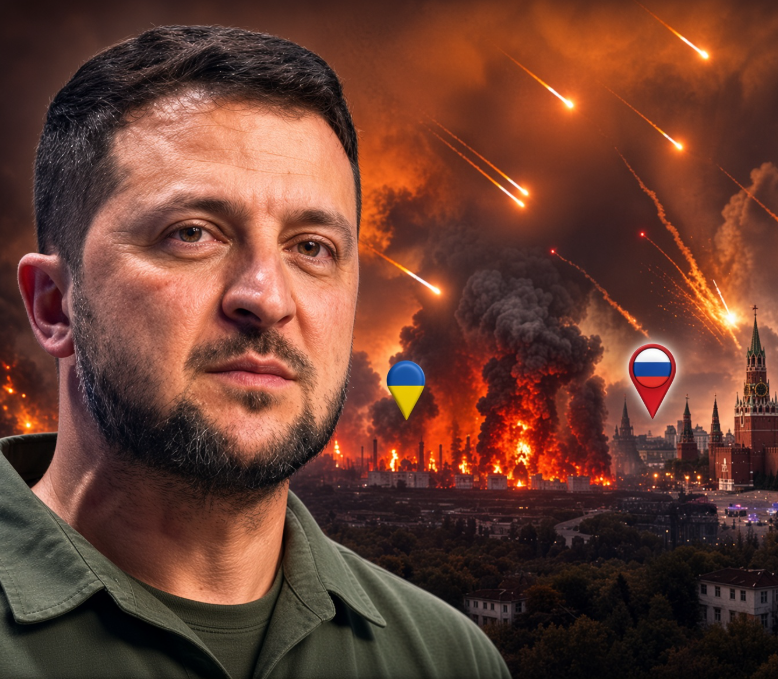
Moscow is facing a major security and economic crisis following a massive Ukrainian aerial assault, according to claims outlined in The Geo Network’s OSINT analysis. The reported overnight operation involved more than 1,000 Ukrainian drones and missiles, using a saturation strategy designed to overwhelm Russia’s air defense network and strike critical infrastructure across the capital.
Among the reported targets was the Kapotnya Gazpromneft refinery, a key fuel supplier for Moscow, alongside the CHPP-22 thermal power plant. The attacks allegedly inflicted serious damage on Russia’s refining and energy infrastructure, raising concerns about fuel availability, electricity generation, and the resilience of essential services.
The disruption reportedly extended into civilian life, with more than 400 flights grounded and fuel queues forming across Moscow. Claims of fuel rationing, including proposed 30-liter limits, underscore the potential consequences of sustained attacks on energy facilities. Russia’s reported need to seek additional fuel supplies from Kazakhstan and Belarus highlights the pressure that infrastructure damage could place on domestic distribution networks.
The broader economic picture is also complicated by proposed US sanctions associated with Senator Lindsey Graham, which could increase pressure on countries continuing to purchase Russian energy, including China and India. If implemented and enforced, such measures could further challenge Moscow’s oil revenues and its ability to offset wartime economic costs.
This Geo Network OSINT breakdown examines the reported drone saturation tactics, damage to strategic energy facilities, disruption to Moscow’s aviation and fuel networks, and the potential consequences for Russia’s energy sector. However, the specific damage figures, fuel restrictions, and operational claims require independent verification. Together, these developments illustrate how long-range drone warfare and economic pressure could place additional strain on Russia’s infrastructure, energy security, and wartime resilience.